
Contents
Water extraction usually takes a few hours, but your timeline depends on the size of the affected area, how deep the water sits, and what materials absorbed it. A small room with clean water may clear fast, while larger spaces or contaminated water can slow the job. Technicians also need time to set up the right equipment and check for hidden moisture, which can change the schedule more than you’d expect. Here is a clear water extraction timeline so you know what to expect at each stage.
Key Takeaways
- Water extraction usually takes a few hours when the water source is stopped and equipment is set up quickly.
- Smaller rooms and shallow water are cleared faster than large spaces or deep standing water.
- Clean water is removed faster than contaminated water, which needs more careful handling.
- Carpets, drywall, insulation, and hidden moisture can extend extraction and drying time.
- Fast response, good equipment, and clear access help shorten the overall service timeline.
How Long Water Extraction Usually Takes
Water extraction usually takes a few hours, but the exact timeline depends on the size of the affected area, the amount of standing water, and how quickly the crew can access the space.
You’ll usually see fast progress once technicians set up pumps, vacuums, and moisture checks. For most jobs, how long water extraction services take is measured in hours, not days, when the water source is stopped and the area stays accessible.
You can expect the team to remove pooled water, verify hidden moisture, and confirm the space is ready for the next step.
If you’re dealing with a flooded room, you’re not alone; a trained crew can move quickly, work methodically, and help you regain control with minimal disruption.
What Changes the Water Extraction Timeline?
Several factors can speed up or slow down the water extraction timeline, even when crews usually finish the job in a few hours. You’ll see the biggest delays when water has spread into hidden cavities, when materials hold moisture, or when access points are limited.
Fast response helps you protect your space and stay with the process from start to finish.
Water source type: Clean water moves faster than contaminated water because crews can extract it sooner.
Material absorption: Carpets, padding, and drywall retain water and require extra removal steps.
Equipment setup: Proper pumps, vacuums, and containment tools improve efficiency, but site conditions can still add time.
You can expect a tighter timeline when crews can work immediately and keep drying focused.
How Room Size Affects Water Extraction
Room size directly affects how long extraction takes because square footage changes the amount of standing water and the airflow you need to manage.
In a small room, you can usually remove water and set drying equipment faster, while a larger space creates more coverage gaps and longer moisture control.
You’ll see the timeline extend as the area grows, since bigger rooms need more passes, more equipment, and tighter monitoring.
Small Room Drying
Even a compact room can dry faster, but its size still affects how long water extraction takes. You’ll usually see quicker results because technicians can remove standing water and set drying gear efficiently.
Still, you need to account for layout, materials, and trapped moisture around baseboards or under fixtures.
- Smaller floor area means less water to extract.
- Tight spaces let air movers and dehumidifiers reach more surfaces.
- Hidden pockets behind cabinets can still slow you down.
You and your service team can track progress with moisture readings, not guesswork. That keeps the job practical and keeps you in the loop.
When the room is small, focused equipment placement and steady monitoring help you return to normal sooner, with less disruption and fewer surprises for your home or business.
Large Space Challenges
Larger spaces usually slow water extraction because your team has more square footage to cover, more standing water to remove, and more airflow to manage.
You’ll often see crews split the area into zones, so they can work faster and avoid missing wet pockets. Open layouts can also trap moisture in corners, behind furniture, and under fixtures, which means you need careful setup before extraction starts.
When you join a response team that uses mapped paths, high-capacity pumps, and frequent checks, you help shorten delays. Clear access matters too, since blocked routes force extra handling.
In large rooms, coordination is key: the better your team communicates, the more efficiently it can remove water and move toward drying.
Square Footage Impact
Square footage directly affects how long water extraction takes because every additional area adds more water to remove, more surface to inspect, and more equipment repositioning.
When you’re dealing with a small room, crews can usually set up, extract, and move on fast. In larger rooms, moisture spreads farther, so you’ll need more passes and tighter monitoring to stay on track.
- Bigger floors hold more water.
- Wider layouts slow hose and vacuum movement.
- More corners and seams require closer inspection.
You can expect the job to scale with room size, especially if water reached under furniture or baseboards.
A good crew will adjust equipment placement and drying strategy so you stay informed and supported throughout the process.
Why Water Depth Slows Extraction
Deeper water takes longer to extract because pumps must remove a larger volume before the affected area is dry enough for cleanup and drying to begin.
You’ll also face more resistance as water settles into carpet backing, pad, subfloor gaps, and low spots, so extraction has to keep working until those hidden pockets drop.
In practice, shallow spills often clear fast, while standing water may need multiple passes with truck-mounted or portable equipment.
You can speed the process by clearing access, limiting foot traffic, and reporting any trapped water lines or saturated rooms early.
When you know the depth, you can set realistic expectations and stay aligned with the crew.
That helps your team move efficiently, reduce delays, and keep the restoration plan on track.
How Damage Type Changes Removal Speed
The type of damage affects extraction speed because each material holds and releases water differently. You’ll usually see faster removal after clean water spills on hard surfaces, since technicians can lift surface moisture quickly.
Carpet, drywall, and insulation slow the job because they trap water inside layers and need more passes.
- Hard floors: water sits on top and comes out fast.
- Carpet and pad: water moves deeper, so extraction takes longer.
- Porous building materials: they retain moisture and delay full removal.
Contaminated water can also slow you down because crews must work more carefully to protect your space.
When you know the damage type, you can set realistic expectations and stay aligned with the team handling your property.
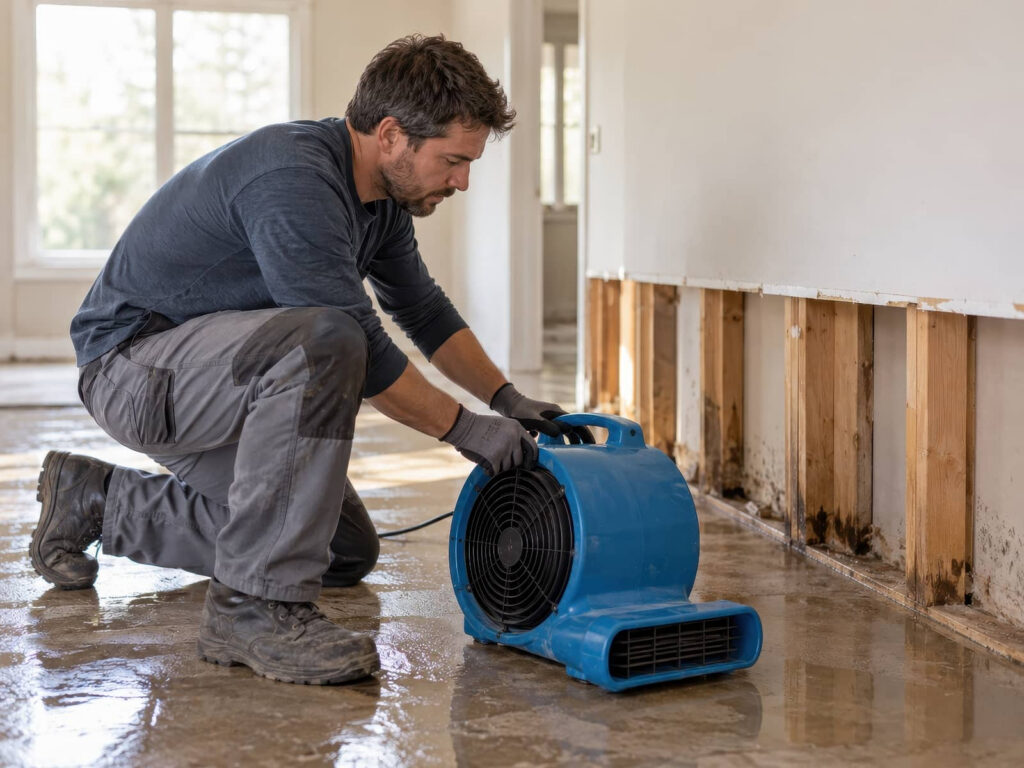
How Equipment Speeds Up Water Removal
High-capacity extraction units remove standing water fast, so you can reduce the initial moisture load in less time.
Air movers increase evaporation, and dehumidifiers pull that vapor out of the air to keep the drying cycle moving.
When you use the right equipment together, you’ll speed up water removal and shorten the overall service time.
High-Capacity Extraction Units
When water covers a large area, you’ll get faster results when technicians use high-capacity extraction units because these machines move far more water per minute than standard equipment.
You benefit from faster drawdown, shorter crew time, and less spreading into unaffected spaces. In a typical job, the team places units at the deepest points, then routes hoses to collect water efficiently.
- High flow rate: Removes standing water quickly.
- Wide coverage: Treats larger sections without constant repositioning.
- Direct suction: Pulls water from carpets, padding, and hard floors.
You stay in control because the crew can target heavy saturation first, which trims delays and keeps the restoration process moving.
Air Movers And Dehumidifiers
Once standing water is removed, air movers and dehumidifiers speed the next phase by pushing moisture out of materials and lowering humidity. You’ll see air movers create focused airflow across carpets, baseboards, and drywall, which helps trapped water evaporate faster.
Dehumidifiers then pull that vapor from the air, preventing it from settling back into your space. Together, they shorten drying time, reduce swelling, and limit secondary damage.
You should expect technicians to place equipment based on wet materials, room size, and airflow paths. They’ll adjust settings as moisture levels drop, so drying stays efficient.
If your team uses enough equipment and monitors it closely, you’re part of a faster, safer recovery. That means less downtime, fewer repairs, and a smoother return to normal.
What to Expect on the First Visit
During the first visit, the water extraction team inspects the affected areas, identifies the source and spread of water, and sets up the extraction equipment.
You’ll get a clear walkthrough, so you know what’s happening and why. The crew will explain the plan, protect your property, and begin removing standing water right away.
Expect focused work, quick measurements, and direct updates from the technician leading the job.
- Site inspection and moisture check
- Equipment placement and extraction start
- Status update and next-step summary
You can stay nearby, ask questions, and follow each step with confidence. The goal is to get your space stable fast and keep you informed throughout the visit.
Why Water Extraction Sometimes Takes Longer
Water extraction can take longer if the water has spread into wall cavities, under flooring, or into insulation, because hidden moisture slows access and drying.
You’ll also wait longer when crews need to remove baseboards, lift carpet, or drill access holes to reach trapped water.
Heavy saturation, contaminated water, and structural damage can add safety checks and extra containment steps.
Large homes, multi-room losses, and poor drainage extend setup and pump-out time.
If humidity stays high or the HVAC can’t circulate air, drying won’t move as fast.
You can help by clearing access routes and approving repairs quickly.
When you know these delays, you can plan better, ask sharper questions, and stay connected with the team handling your cleanup.
Frequently Asked Questions
Do I Need to Leave My Home During Water Extraction?
Not always. You can often stay if the area’s safe, but you’ll need to avoid work zones, power hazards, and noise. If contamination, structural damage, or mold risk exists, leave until professionals clear it.
Can Water Extraction Services Remove Contaminated Water Safely?
Yes, you can trust them to remove contaminated water safely when they use proper PPE, containment, and antimicrobial protocols. You’re not alone—trained technicians protect your home like sentinels, reducing health risks and restoring your space fast.
Will My Insurance Cover Water Extraction Costs?
Your insurance may cover water extraction costs if your policy includes sudden, accidental damage. You’ll need to document losses, notify your insurer fast, and confirm deductible, exclusions, and claim approval requirements.
How Soon Should I Call for Water Extraction After Flooding?
Call water extraction immediately after flooding—every minute lets water creep into walls, flooring, and belongings. You’ll protect your home faster, limit mold risk, and keep your recovery on track with your restoration team.
Can Water Extraction Prevent Mold Growth Completely?
No, you can’t ensure that. You can remove standing water quickly, but moisture trapped in materials may still feed mold. You’ll need thorough drying, dehumidification, and inspection to reduce risk and protect your space.
Conclusion
In the end, water extraction usually takes just a few hours, though your space may call for a bit more time. You’ll see faster results in smaller rooms, with shallower water, and when the damage is clean. Larger areas, absorbed moisture, or more delicate conditions can stretch the visit. When technicians bring the right equipment and keep you informed, the process stays on track and your property gets back to a drier, steadier state sooner.
Recent Posts
Water Extraction Services and Structural Drying
You need rapid water removal, you need controlled structural drying, and you need accurate moisture
Water Extraction Services for Flooded Homes Explained
If a pipe bursts in your basement at 2 a.m., you need fast water extraction
Water Extraction Services for Burst Pipes
When a pipe bursts, you’re up against more than a mess—you’re fighting the clock. You