
Contents
You need rapid water removal, you need controlled structural drying, and you need accurate moisture assessment. When standing water sits in floors, walls, or insulation, you’re already facing saturation, slip risk, and microbial growth. Professional extraction and drying stop that progression with targeted pumps, vacuums, dehumidifiers, and air movement, but the real challenge starts after the visible water is gone, when hidden moisture can still compromise the structure.
Key Takeaways
- Water extraction services remove standing water quickly with pumps, vacuums, and extraction tools to limit saturation and slip hazards.
- Structural drying uses airflow, humidity control, and monitoring to remove hidden moisture from subfloors, walls, and cabinets.
- Professional assessment identifies water source, contamination level, and affected areas to guide safe remediation and documentation.
- Quick action helps prevent mold growth, warping, hidden damage, and higher repair costs after leaks, storms, or sewage events.
- Moisture readings and visible signs like swelling, dampness, or musty odors indicate when expert drying is needed.
What Water Extraction Services Remove First?
Water extraction services remove standing water first, because immediate removal limits further saturation of flooring, drywall, insulation, and structural materials.
You get a fast response that targets pooled water on surfaces, in cavities, and under finishes. Technicians use pumps, vacuums, and weighted extraction tools to pull water from carpet, pad, and subfloor assemblies.
They also remove trapped moisture from cabinets and wall bases when access allows. This first phase stabilizes the property and prepares it for structural drying.
You stay informed through clear measurements and controlled progress, so you know your space is being handled with precision.
How Structural Drying Prevents Mold And Damage
Structural drying removes residual moisture quickly, reducing the time materials stay wet and vulnerable.
You limit mold growth when you control humidity, increase airflow, and dry structural components before water can migrate deeper.
This fast moisture removal also helps prevent warping, deterioration, and hidden damage in building materials.
Moisture Removal Speed
Fast moisture removal is critical because damp materials can begin supporting mold growth within 24 to 48 hours, and prolonged saturation can weaken framing, drywall, and flooring.
You need rapid extraction, targeted air movement, and controlled dehumidification to drive moisture out of building assemblies before hidden water lingers.
When you act quickly, you reduce swelling, delamination, and corrosion in systems that support your space.
Technicians monitor surface and internal moisture levels so they can adjust equipment and keep drying on track.
That disciplined pace helps you protect your property and stay confident in the recovery process.
In a professional restoration plan, speed isn’t optional; it’s the metric that tells you whether structural drying is working and whether your home or facility can return to service safely.
Mold Growth Prevention
Mold prevention depends on removing moisture before it settles into porous materials and concealed cavities. You stop spore activation by lowering humidity, increasing airflow, and extracting water from walls, floors, and insulation fast.
Structural drying targets hidden wet zones that you can’t see, so you reduce the conditions mold needs to colonize. When you deploy dehumidifiers and air movers correctly, you accelerate evaporation and keep surfaces above the moisture threshold that supports growth.
You also protect finishes, framing, and contents from secondary damage, including staining, odor, and deterioration. By acting quickly and using documented drying targets, you stay aligned with proven restoration practice.
That means you’re not just drying a building; you’re preserving a healthier space where your property and people can belong safely.
Water Extraction Services Step By Step
You start by identifying the water source and classifying the intrusion, because accurate assessment determines the correct extraction method.
Next, you remove standing water with professional extraction equipment to reduce saturation and limit material damage.
Then you deploy controlled drying to restore moisture levels and stabilize the structure.
Water Source Assessment
Before extraction begins, a technician assesses the water source to determine contamination level, spread, and the safest remediation method. You’re part of a process that relies on accurate classification, because clean water, gray water, and sewage each demand different controls.
The inspection identifies the source, affected materials, and any visible hazards so you can trust the response plan.
- Verify the origin of intrusion and document it precisely.
- Classify the water to match the correct safety protocol.
- Map the affected area to guide your team’s next steps.
This assessment protects your property, supports informed decisions, and keeps your restoration team aligned.
When you understand the source, you know what risks you’re facing and what standards must guide the job.
Extraction And Drying
Once the source, contamination level, and affected materials are confirmed, extraction can begin with the right equipment and safety controls. You’ll remove standing water with truck mounts, portable extractors, submersibles, and weighted wands, matching each tool to the surface and depth.
Keep negative airflow and containment in place if contamination exists, so you protect the rest of the structure and your crew. After bulk water is gone, you’ll lift moisture from carpets, pad, subfloors, and wall cavities with focused vacuuming and strategic demolition where needed.
Then you’ll deploy air movers, dehumidifiers, and heat to drive evaporation and stabilize humidity. Measure moisture daily, adjust equipment, and keep drying balanced until materials reach acceptable targets.
This method keeps your project controlled, efficient, and aligned with the team.
Equipment Used For Structural Drying
Structural drying relies on specialized equipment that removes moisture quickly and controls the environment to prevent secondary damage.
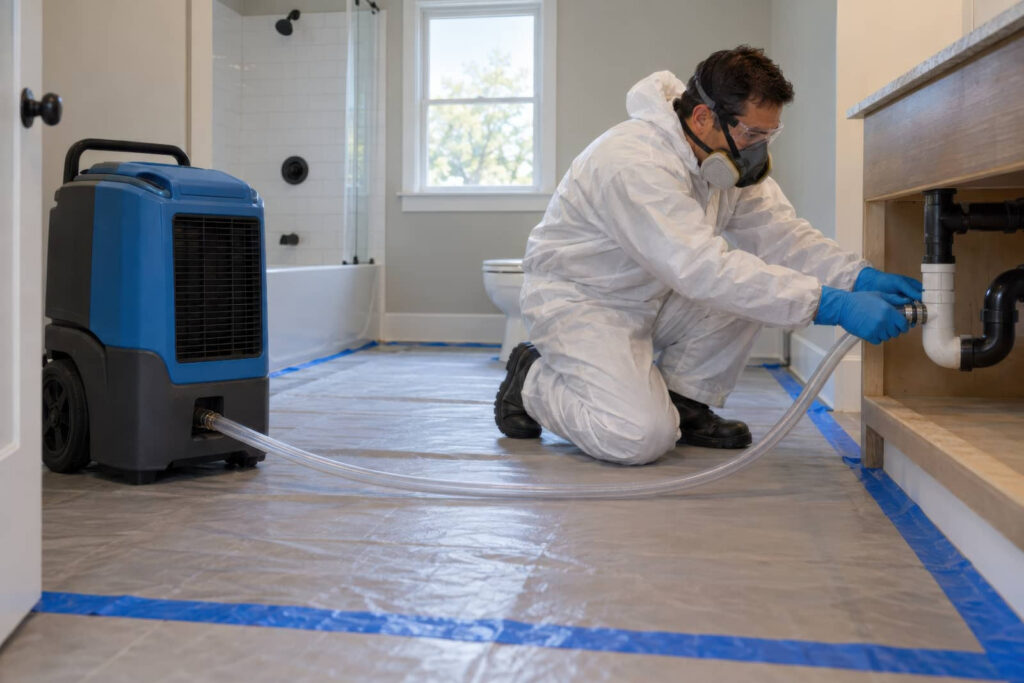
You’ll typically see air movers, dehumidifiers, and moisture meters working as a coordinated system. Air movers increase surface evaporation, while dehumidifiers capture that vapor and stabilize humidity. Moisture meters let you track progress with precision, so you’re not guessing.
When you understand the role of each tool, you can stay aligned with the drying plan and trust the process.
- Air movers accelerate evaporation across floors, walls, and cavities.
- Dehumidifiers pull moisture from the air and support balanced drying.
- Moisture meters verify conditions so you can document consistent results.
Together, these tools help your property dry methodically, efficiently, and with professional control.
Signs You Need Professional Drying
Even with air movers, dehumidifiers, and moisture meters in place, some water damage calls for professional drying to protect the structure and prevent hidden issues.
You need expert help when wet materials stay cool, swollen, or damp after initial extraction, or when readings remain elevated in framing, subflooring, or wall cavities.
If you notice musty odors, visible staining, warped trim, or soft drywall, moisture is likely trapped beyond the surface.
You should also act fast after sewage, storm surge, or long-duration leaks, because contamination and saturation demand controlled drying protocols.
Professional technicians can verify moisture migration, set targets, and document progress.
That gives you confidence, protects your property, and helps your space return to safe, stable conditions sooner.
Common Problems During Structural Drying
During structural drying, you can run into persistent problems like hidden moisture in wall cavities, slow evaporation from dense materials, and uneven airflow that leaves some areas wetter than others.
You may also see surface dryness that masks damp framing, subflooring, or insulation. If you don’t verify readings across layers, you’ll miss trapped moisture and prolong the job.
Missed pockets: You need consistent meter checks at seams, corners, and penetrations.
Restricted drying: You should open pathways for air to reach enclosed materials.
Uneven progress: You must rebalance equipment when one zone dries faster than the rest.
When you track these variables, you stay aligned with your team and keep the drying plan moving with confidence.
How Water Extraction Services Restore Safety
Water extraction services restore safety by removing standing water fast, which lowers slip hazards, limits microbial growth, and reduces further damage to building materials.
You also help stabilize your space by reducing moisture that can weaken subfloors, warp drywall, and compromise electrical systems.
Technicians use pumps, vacuums, and moisture meters to target affected zones and verify that hidden water isn’t lingering. That means you can reenter with greater confidence, knowing the environment’s been assessed, controlled, and prepared for drying.
When you act quickly, you protect your property and support the people who rely on it. You’re not just drying a structure; you’re restoring a safer, healthier place that belongs to everyone inside.
Frequently Asked Questions
How Long Does Water Extraction Usually Take?
Water extraction usually takes 1 to 3 hours, depending on damage size, water volume, and access. You’ll get faster results when you act immediately and use professional equipment to remove water thoroughly.
Can I Stay in My Home During Structural Drying?
Usually, yes, you can stay if conditions are safe. You’ll need clear access for equipment, stable power, and controlled humidity. If contamination, mold, or major demolition exists, you shouldn’t remain onsite.
Does Insurance Typically Cover Water Extraction Services?
Usually, yes—you’ll see coverage if the loss is sudden and accidental. You should review your policy, document damage, and report quickly; you’ll protect your claim, strengthen your case, and belong in the process.
How Soon Should Water Extraction Begin After Flooding?
You should begin water extraction within 24 hours, ideally immediately. You’ll reduce structural damage, mold growth, and contamination when you act fast. Contact a qualified team right away so you’re protected and supported.
What Should I Do Before the Drying Crew Arrives?
You should shut off power to affected areas, move valuables, and ventilate safely. Don’t use wet appliances, and document damage. Stay accessible, so you can support the crew and protect your space.
Recap
You do not get to negotiate with water; you remove it, dry the structure, and move on. First, you extract the standing water, because puddles are not “character-building.” Then you dry hidden cavities, trim moisture, and verify levels with proper meters. This disciplined sequence limits mold, protects framing, and restores safety. If you want your property back in service, treat drying as a controlled process, not a heroic guess.
Recent Posts
How Long Water Extraction Services Usually Take
Water extraction usually takes a few hours, but your timeline depends on the size of
Water Extraction Services for Flooded Homes Explained
If a pipe bursts in your basement at 2 a.m., you need fast water extraction
Water Extraction Services for Burst Pipes
When a pipe bursts, you’re up against more than a mess—you’re fighting the clock. You