
Contents
You may wonder whether Smoke Damage Cleanup after a kitchen fire only needs to address the surface, but that theory only holds if you act fast and clean in the right order. You need to secure the area, remove soot before it spreads, and treat hidden residue in cabinets, appliances, and vents. The real challenge is stopping odor from settling in, and that’s where the next steps matter most.
Key Takeaways
- Confirm the fire is fully extinguished, then ventilate the area and wear gloves, an N95 mask, and closed-toe shoes.
- Remove loose soot from ceilings, walls, and cabinets using a HEPA vacuum or soot sponge before wet cleaning.
- Wash painted surfaces with mild degreaser and clean wood or delicate materials with pH-neutral, low-moisture cleaners.
- Clean appliances, vents, and HVAC filters carefully, disconnecting power first and replacing heavily damaged or warped materials.
- Launder fabrics, air-dry them completely, and call professionals for persistent smoke odors or deep soot contamination.
How Kitchen Fire Smoke Damages Your Home
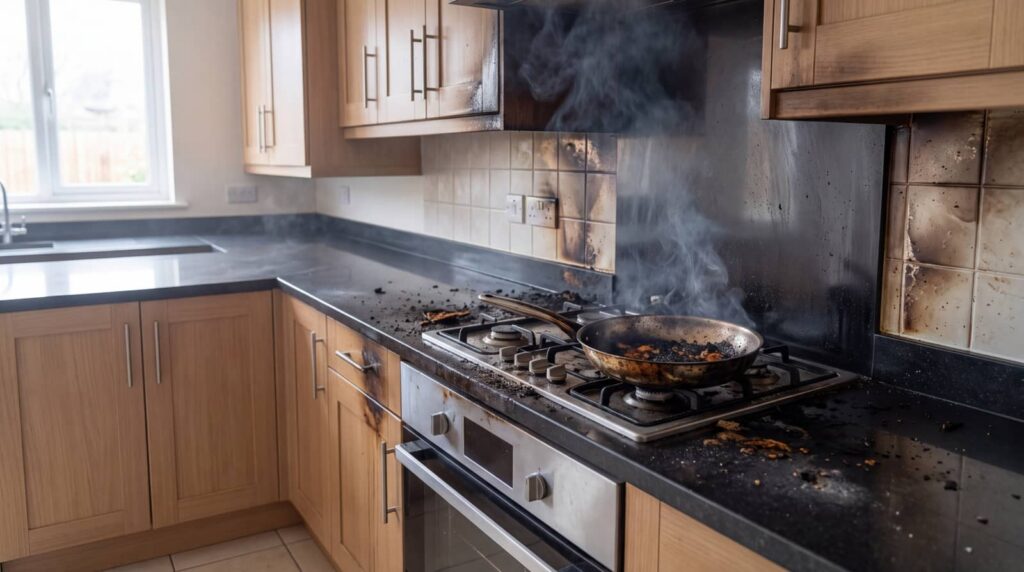
When a kitchen fire occurs, smoke doesn’t just discolor visible surfaces—it quickly spreads through the home and settles into walls, ceilings, cabinets, fabrics, and HVAC components.
You may notice greasy soot on nearby finishes, but finer particles also penetrate porous materials and leave acidic residues that continue to stain and corrode.
In shared homes, that means every room can feel affected, even if the fire stayed in one area.
Odors cling to upholstery, drywall, and ductwork because smoke particles bond with moisture and organic compounds.
During smoke damage cleanup after a kitchen fire, you’re restoring more than appearance; you’re removing residues that can keep spreading contamination and odor.
When you understand this process, you can take confident, informed steps with a team that knows how to bring your space back.
Make the Kitchen Safe Before Cleaning
Before you start smoke damage cleanup, make sure the kitchen is safe to enter and work in. You belong in a space that’s stable, controlled, and ready for careful cleaning.
First, confirm the fire is fully out and the area is cool. Then shut off gas, electricity, and water if you can do so safely. Open windows for ventilation, but avoid fans that can spread residue. Wear gloves, an N95 respirator, and closed-toe shoes to reduce exposure.
- Check for structural damage before stepping farther in.
- Remove loose debris only if it’s safe.
- Keep children and pets away until hazards clear.
If you smell gas, hear hissing, or see exposed wiring, leave immediately and call emergency services or your utility provider.
Clean Soot From Walls, Cabinets, and Ceilings
Start with the highest surfaces first so soot doesn’t fall onto areas you’ve already cleaned. You should dry-clean loose residue with a soot sponge or vacuum fitted with a HEPA filter, moving gently in straight passes.
Work from ceilings down to upper cabinets, then walls, using light pressure so you don’t smear the film. Change cloths often, and keep one bucket for cleaning solution and one for rinsing.
For painted surfaces, wash with warm water and a mild degreaser, then wipe with a clean damp cloth and dry immediately.
For wood cabinets, use a pH-neutral cleaner and avoid soaking the finish. If staining remains, repeat the process patiently.
You’re restoring a shared space, so steady technique helps your kitchen feel safe and welcoming again.
Remove Smoke Residue From Appliances
You’ll need to clean appliances safely by disconnecting power, removing loose debris, and using manufacturer-approved methods for each surface.
Next, degrease burnt residue with a controlled cleaner that breaks down soot without damaging finishes or seals.
Finally, deodorize the interior components so hidden smoke odors don’t return after the cleanup is complete.
Safe Appliance Cleaning
After a kitchen fire, clean appliances carefully so smoke residue doesn’t keep spreading odors or corrode surfaces. You should unplug each unit first, then wipe exterior panels with a soft microfiber cloth and a manufacturer-approved cleaner.
Work in small sections, and dry every surface right away to prevent moisture from entering vents or seams. If you’re part of a household cleanup team, keep your supplies labeled and your steps consistent so everyone stays safe.
- Check cords, switches, and seals for soot buildup.
- Clean knobs, handles, and touchscreens with light pressure.
- Replace filters or contact a technician if residue remains.
You’ll protect performance, reduce lingering smell, and restore a cleaner, calmer kitchen together.
Degreasing Burnt Surfaces
Smoke residue on appliances often includes a greasy film that traps odor, so remove it with a degreasing cleaner designed for the material you’re treating.
Apply the solution to a microfiber cloth, not directly onto vents, seams, or control areas. Wipe in controlled passes, letting the cleaner break down soot without soaking the surface.
For baked-on spots, use a nonabrasive pad and steady pressure, then rinse the area with a clean damp cloth. Dry each section right away to prevent streaking and corrosion.
If you work methodically, you’ll protect finishes and restore a clean, confident look.
Take your time around handles, edges, and buttons, since residue hides there and can make the appliance feel neglected even after the visible fire damage is gone.
Deodorizing Interior Components
Once the outer surfaces are clean, focus on the inside of the appliance, where smoke residue can cling to liners, racks, seals, and hidden crevices. You’ll need to neutralize odor before it settles in, so work methodically and don’t rush.
Remove detachable parts, wash them with a mild degreaser, and dry them completely.
- Vacuum loose ash from vents and seams.
- Wipe interior walls with a soot-safe cleaner.
- Place baking soda or activated charcoal inside overnight.
Keep the door open for airflow, and inspect gaskets for trapped residue. If you still notice a burnt smell, repeat the process until it fades.
You’re restoring a clean, familiar space, and careful deodorizing helps your kitchen feel like home again.
How to Remove Kitchen Fire Smoke Odors
A thorough cleaning process can remove kitchen fire smoke odors and help restore your home to a livable condition. You should start by ventilating the area, then clean every hard surface with a soot-specific detergent and warm water.
Wash fabrics, curtains, and removable linens with odor-neutralizing laundry products. Use a HEPA vacuum on dry debris before wiping to avoid spreading residue.
Next, apply an enzyme or hydroxyl odor treatment to cabinets, walls, and sealed surfaces, following label directions. Run air scrubbers or portable fans with fresh filters to circulate cleaner air.
Replace HVAC filters and keep the system off until you’ve removed loose soot. With steady, methodical care, you can make your kitchen feel safe, fresh, and truly yours again.
When to Replace Smoke-Damaged Kitchen Materials
You should replace kitchen materials if you see visible warping, buckling, or cracked finishes, since heat and smoke can weaken their structure.
If a surface still holds a persistent odor after thorough cleaning, it often means smoke has penetrated too deeply for full restoration.
Assess each item methodically so you can choose replacement only when cleanup won’t restore safe, functional performance.
Visible Material Warping
Warping is a clear sign that smoke and heat have permanently stressed kitchen materials, and it often means cleaning alone won’t restore them. You should inspect cabinets, countertops, and trim for bowed edges, lifted seams, or panels that no longer sit flush.
When you see distortion, you’re usually dealing with structural compromise, not just surface residue.
- Replace swollen particleboard or MDF.
- Swap cracked laminate that’s separating.
- Remove warped wood that no longer aligns.
You can trust a methodical approach here: document damage, compare each piece to adjacent surfaces, and decide based on fit and stability.
If a material won’t return to shape, replacement helps your kitchen feel safe, consistent, and ready for the next step in smoke damage cleanup.
Persistent Odor Retention
When smoke odors linger after deep cleaning, they often signal that porous kitchen materials have absorbed contaminants beyond what surface washing can remove.
You should inspect cabinets, insulation, drywall, textiles, and composite panels for stubborn scent after heat and detergent treatment. If the odor returns when humidity rises or warm air circulates, replacement usually makes more sense than repeated cleaning.
You can also test sealed surfaces: if odor escapes from seams, edges, or fasteners, smoke has penetrated the core. Replace items that keep smelling after ozone-free deodorization, especially food-contact materials and hidden substrates.
This approach protects your home’s air quality and helps your kitchen feel like part of a safe, welcoming space again. A thorough smoke damage cleanup plan gives your household a cleaner reset.
Clean Soft Items After a Kitchen Fire
Soft items absorb smoke quickly, so prioritize them early to prevent odors from settling in. You should gather curtains, cushions, throws, and washable clothing, then separate items by fabric care label.
Launder machine-safe pieces with detergent and an odor-neutralizing additive, using the warmest safe water. For delicate textiles, vacuum both sides with a HEPA attachment before you spot-treat any visible residue. Air-dry everything fully to keep trapped moisture from creating new problems.
- Wash similar fabrics together.
- Avoid overwetting fragile fibers.
- Reclean anything that still smells smoky.
If an item still holds soot after cleaning, repeat the process rather than forcing harsh scrubbing. You’re building a cleaner, safer space for everyone at home.
Check Ducts and Vents for Hidden Smoke Damage
Smoke can settle inside ducts and vents long after visible surfaces look clean, so you should inspect HVAC registers, return grilles, and exhaust vents for soot, residue, and odor.
Remove each cover and look for gray film, sticky buildup, or a burnt smell when air moves. If you notice these signs, keep the system off until you’ve checked the full pathway from intake to outlet.
Replace or clean filters right away, since they trap fine particles that can recirculate through your home. Wipe accessible metal surfaces with a damp microfiber cloth and mild cleaner, then dry them fully.
You’re not alone in this process; many kitchen fires leave hidden residue in air channels. A careful check now helps protect shared indoor air and supports steady smoke damage cleanup.
What Professional Smoke Damage Cleanup Includes
Professional smoke damage cleanup starts with targeted soot removal, using HEPA vacuuming, dry sponging, or wet-cleaning methods matched to the affected surface.
You’ll also need odor neutralization steps, such as thermal fogging, hydroxyl treatment, or ozone where appropriate, to address smoke particles trapped in porous materials.
This process restores surfaces systematically and helps eliminate lingering kitchen fire odors.
Soot Removal Methods
After a kitchen fire, soot removal starts with a careful assessment of what can be cleaned and what needs specialized treatment. You’ll work through each surface methodically, so fragile materials don’t get damaged and recoverable areas stay intact.
Professionals use dry-cleaning sponges, HEPA vacuuming, and controlled wet cleaning to lift loose residue before it embeds deeper. They also match the method to the surface, which helps you feel confident that your space is in capable hands.
- HEPA vacuums capture fine soot particles without spreading them.
- Dry sponges lift powdery buildup from painted and sealed surfaces.
- Detergent wipes remove oily film from cabinets, tile, and metal.
This process restores clean surfaces, limits staining, and gives your kitchen a steadier path back to normal.
Odor Neutralization Steps
Once the visible residue is gone, odor neutralization targets the particles trapped in porous materials, cavities, and HVAC pathways.
You’ll begin by identifying affected materials, then you’ll isolate the source areas so odors don’t spread. Professionals apply HEPA vacuuming, wipe-clean residues, and use controlled thermal or chemical treatments to break down smoke molecules.
They’ll place hydroxyl or ozone equipment only after checking occupancy, airflow, and material compatibility. Your ducts, cabinets, and soft furnishings may need targeted deodorants or sealants after deep cleaning.
Throughout the process, technicians monitor moisture and ventilation, because trapped humidity can keep odors active.
You’re not dealing with the smell alone; you’re restoring a safe, familiar home environment. With each step, your space moves closer to normal, and you can feel confident that lingering smoke won’t return.
Prevent Smoke Odors From Returning
To keep smoke odors from returning, you need to remove every residue source, not just mask the smell. You should clean porous and hard surfaces with a degreasing detergent, then dry them completely.
Replace HVAC filters, wash fabrics, and inspect hidden spaces where soot can settle. Seal damaged wood only after it’s fully cleaned.
- Vacuum with a HEPA unit to capture fine soot.
- Run exhaust fans and dehumidifiers to lower lingering moisture.
- Check cabinets, vents, and trim for trapped odor.
When you handle each layer methodically, you protect the progress you’ve made and help your home feel settled again.
If odors persist, a professional assessment can target deep contamination and give you confidence that the problem won’t come back.
Frequently Asked Questions
How Soon Should Smoke Cleanup Begin After a Kitchen Fire?
You should start smoke cleanup as soon as the fire’s out and it’s safe to enter. You’ll limit staining, corrosion, and odors by acting within hours, then ventilating, documenting damage, and cleaning carefully.
Can Painted Walls Be Saved After Smoke Damage?
Yes, you can often save painted walls if you clean them promptly. You’ll wash soot, test the paint, and seal stains before repainting. If the finish is badly blistered, you’ll need replacement or refinishing.
Is It Safe to Use HVAC Before Inspection?
No, you shouldn’t use it. Why risk spreading soot, odors, and hidden contaminants? You’ll protect your home better by keeping HVAC off, checking filters, and letting an inspector clear the system first.
What Cleaning Products Work Best on Greasy Smoke Residue?
You’ll get the best results with a degreasing alkaline cleaner, warm water, and a microfiber cloth; add trisodium phosphate only if permitted, and finish with a mild detergent to remove residue and odors safely.
How Long Does Kitchen Smoke Odor Usually Last?
Kitchen smoke odor can linger for days or weeks if you don’t clean thoroughly; with prompt ventilation, deep cleaning, and odor treatment, you’ll usually notice improvement within 24–72 hours, depending on residue and materials.
Review
After a kitchen fire, you need to act fast and clean methodically to limit long-term smoke damage. In just minutes, fine soot can spread through your home’s air pathways, which is why thorough cleanup matters. You should secure the area, remove residue from hard surfaces, launder soft items, and inspect ducts and vents. If odors linger or damage runs deep, you’ll want professional help to restore safe, clean air and prevent smoke from coming back.
Recent Posts
How to Remove Smoke Odor After Fire Damage
After a small kitchen fire, you may notice the smoke smell clinging to walls, fabrics,
The Professional Smoke Damage Cleanup Process Explained
When Professional Smoke Damage Cleanup is needed, you need a cleanup process that goes beyond
Smoke Damage Cleanup: How Professionals Restore Homes After Fire
After a fire, you need more than a quick cleanup; you need a methodical restoration