
Contents
You may be surprised how quickly hidden water can spread behind walls and under floors. When you call professional water extraction services, you’re getting a measured process that starts with pinpointing the source, mapping the damage, and selecting the right extraction tools for each surface. From there, technicians remove water, control drying, and sanitize affected areas to limit mold and structural issues—while one key step often determines how much damage remains.
Key Takeaways
- Professionals first assess the damage, identify the water source, and map affected areas using moisture meters and thermal imaging.
- They stop the water source, contain the spread, and use truck-mounted or portable extraction equipment to remove standing water.
- Specialized tools lift water from carpets, hard surfaces, and hidden spaces to prevent trapped moisture and further damage.
- Targeted air movers and dehumidification dry the area while technicians monitor moisture levels and adjust equipment as needed.
- Surfaces are sanitized, contaminated porous materials removed, and humidity controlled to reduce mold and bacterial growth.
What Is Professional Water Extraction?
Professional water extraction is the rapid, systematic removal of standing water from your property using specialized equipment and proven drying methods. You get a controlled response that limits further damage, protects materials, and helps you regain a safe, stable space.
In the professional water extraction services process, technicians use high-capacity pumps, truck-mounted vacuums, and moisture-control tools to remove water efficiently. They work methodically so you’re not left guessing about the next step.
This service focuses on immediate mitigation, not cosmetic cleanup, and it sets the stage for effective drying and restoration. When you bring in trained pros, you join a team that understands urgency, communicates clearly, and keeps your property moving toward recovery with confidence.
How Pros Assess Water Damage
Once the water is removed, technicians assess the damage by identifying the source, mapping the affected areas, and checking how far moisture has traveled into flooring, walls, and structural materials.
You’ll see them use moisture meters, thermal cameras, and visual inspection to pinpoint hidden saturation and confirm what’s dry enough to leave alone. They also note material type, contamination risk, and signs of swelling, staining, or delamination, because each surface reacts differently.
This careful evaluation helps your team choose the right restoration plan and prevents overlooked damage from turning into mold or structural issues.
You’re not just getting a report; you’re getting a clear picture of what’s affected, what’s stable, and what needs professional attention next.
Water Extraction Process Step by Step
After the assessment, technicians move into extraction by matching the method to the water category and the materials involved.
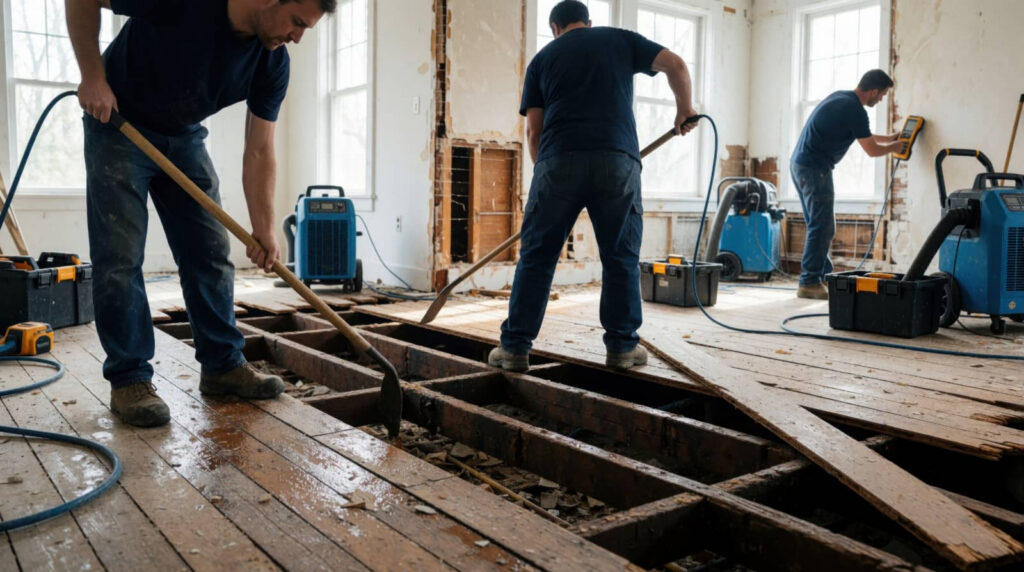
You’ll see them first shut off affected lines if needed, then set up containment to keep water from spreading. They use truck-mounted or portable vacuums, weighted wands, and specialty tools to pull water from carpet, padding, and hard surfaces.
In tight areas, they may lift materials carefully to access trapped moisture without causing extra damage. Every pass is deliberate, so they remove as much liquid as possible while protecting the structure.
You can trust this step because it’s controlled, efficient, and tailored to your space. By working methodically, the crew gives your property the cleanest possible start for the next phase.
Drying the Affected Area
You’ll need to set up targeted air movement to accelerate evaporation across all affected surfaces and hidden cavities.
Next, you should perform routine moisture monitoring checks to verify drying progress and identify any residual dampness.
This controlled process helps you reduce secondary damage and confirms the area is returning to safe moisture levels.
Air Movement Setup
With the standing water removed, technicians set up air movers to accelerate evaporation and dry the affected area efficiently.
You’ll see them position each unit to create strong, directional airflow across floors, walls, and hidden edges where lingering moisture can cling. They place the machines to reduce dead zones and keep air moving through the entire space, helping materials release water faster.
This setup supports a controlled drying process, so your property gets the focused attention it needs. You can feel confident knowing the equipment works as part of a coordinated plan designed to restore your space.
The team adjusts placement for coverage, safety, and access, keeping the work orderly and effective. That careful setup helps you move one step closer to a dry, comfortable environment.
Moisture Monitoring Checks
Once the air movers are running, technicians begin moisture monitoring checks to verify that drying is progressing as planned.
You’ll see them measure affected materials with calibrated meters, compare readings to unaffected areas, and record each result for trend analysis. They check walls, flooring, and concealed spaces to confirm moisture isn’t lingering where you can’t see it.
If readings stall, they adjust airflow, dehumidification, or equipment placement right away. This careful tracking helps protect your property from secondary damage and gives you clear evidence that the drying plan’s working.
You’re not left guessing; you’re kept informed at each step, so you can feel confident your space is moving toward safe, complete restoration with a team that’s watching every detail.
Sanitizing and Preventing Mold
After the standing water is removed and the affected area is dry, sanitizing surfaces helps limit bacterial growth and reduce the risk of lingering contamination. You’ll want to clean hard, nonporous materials with an appropriate antimicrobial solution, then allow full contact time so it can work effectively. This step supports your home or business and helps you feel secure again.
Disinfect high-touch surfaces first.
Treat hidden gaps and seams carefully.
Remove porous items that can’t be sanitized.
Verify dryness to discourage mold regrowth.
You should also control indoor humidity and keep airflow steady, since mold thrives in damp conditions.
When you follow these measures, you protect the space, reduce health risks, and restore a safe environment for everyone who relies on it.
Equipment Used for Water Extraction
Professional water extraction services rely on specialized equipment to remove moisture quickly and thoroughly, and technicians choose each tool based on the type and extent of water damage.
You’ll typically see powerful truck-mounted or portable extractors, which pull standing water from carpets, padding, and hard surfaces with strong vacuum pressure. Submersible pumps handle deeper pooling in basements or confined areas, while weighted extraction tools compress carpet fibers for better water removal.
Air movers and dehumidifiers then support drying by accelerating evaporation and lowering humidity. Moisture meters and thermal imaging cameras help technicians verify hidden dampness and track progress.
This coordinated setup lets you recover your space with less disruption and greater confidence, because each tool works as part of a precise, proven system built for your home or business.
Signs You Need Professional Help
How do you know when water damage has gone beyond a quick cleanup? You’ll usually see saturation that keeps returning, warped flooring, and a musty odor that doesn’t fade. When moisture spreads into walls, subfloors, or insulation, you need trained help.
Standing water remains after towels or a wet vac.
Materials feel soft, swollen, or unstable.
Humidity stays high, and condensation forms indoors.
You notice discoloration, mold spotting, or electrical risk.
Professional water extraction teams use meters, air movers, and containment to remove hidden moisture safely.
That means you’re not handling the problem alone; you’re joining a proven recovery process. Acting early protects your structure, reduces secondary damage, and helps your space feel normal again faster.
Frequently Asked Questions
How Long Does Professional Water Extraction Usually Take?
Usually, you’ll wait 1 to 3 hours for professional water extraction, depending on damage size and access. You’ll get fast, careful work, and we’ll keep you informed so you feel confident throughout.
Does Homeowners Insurance Cover Water Extraction Services?
Yes, your homeowners insurance often covers water extraction if the damage’s sudden and accidental, like a burst pipe. You’ll need to review your policy, report the claim quickly, and document everything for approval.
Can I Stay in My Home During the Extraction Process?
Yes, you can sometimes stay home during extraction, but it’s like keeping a candle in a storm. You’ll need safe, dry access, limited traffic, and technicians may recommend temporary relocation for health, noise, or equipment concerns.
What Should I Do Before the Professionals Arrive?
You should shut off water sources, unplug electronics, clear access paths, and move valuables and documents to safety. You’ll help the crew work faster, reduce hazards, and feel more prepared when they arrive.
How Much Does Professional Water Extraction Typically Cost?
You’ll usually pay $500–$3,000, depending on damage, square footage, and drying needs. Think of it like triage: quicker extraction keeps costs down. You’re not alone; pros will assess, explain, and stabilize your space fast.
Summary
When water invades your space, you need a precise response. You’ve seen how professionals assess damage, extract water, dry materials, and sanitize surfaces to reduce mold risk. Why wait for hidden moisture to cause bigger problems? With the right equipment and a systematic process, you can restore safety and stability faster. If you act quickly and trust trained experts, you’ll protect your property, limit damage, and move toward a clean, dry environment with confidence.
Recent Posts
How Water Extraction Services Remove Standing Water
When water shows up uninvited, time works against you. You start with a site assessment
Emergency Water Extraction Services After Flooding
Many people face water damage emergencies each day in the U.S., and you can’t afford
Water Extraction Services: How Professionals Remove Water Fast
When water hits your property, you need fast extraction before damage spreads. You’ll see crews