
Contents
When you’re drying out a water damaged home, the first step is to stop the source and assess the extent of the intrusion. You then remove standing water, discard unsalvageable materials, and place air movers and dehumidifiers to control airflow and humidity. Moisture meters and thermal imaging help you track hidden dampness, but the real challenge starts when water has moved into walls, floors, and other concealed spaces.
Key Takeaways
- Professionals first stop the water source, shut off supplies, and relieve line pressure to prevent more damage.
- They extract standing water with pumps or vacuums and remove unsalvageable materials like soaked drywall and warped particleboard.
- Air movers and dehumidifiers are arranged for crossflow drying, with doors closed and continuous drainage for efficient moisture removal.
- Moisture meters and logs track drying progress, helping professionals adjust equipment and prevent mold by keeping humidity below 60%.
- They document damage, clean and repair affected areas, and call in specialists when damage is extensive, hidden, or contaminated.
How Pros Dry Water-Damaged Homes
Professionals dry water-damaged homes by quickly removing standing water, then using specialized equipment to control moisture in affected materials and hidden spaces.
You’ll see truck-mounted extractors, air movers, and dehumidifiers working as a coordinated system to pull moisture from carpet, drywall, framing, and subfloors.
Technicians place sensors and meters to verify drying progress, and they adjust airflow and dehumidification based on readings, not guesswork.
This is how professionals dry out water damaged homes with speed and precision.
You stay part of the process by knowing what’s being targeted and why each step matters.
The goal is controlled evaporation, balanced humidity, and documented dryness before repairs begin.
That approach protects your home and helps your team move as one.
Stop the Water Source First
First, shut off the main water supply to stop additional intrusion.
Then locate the leak source so you can confirm whether the failure is plumbing, roofing, or an appliance.
Once you’ve stopped the source, you’ll limit further damage and make drying more effective.
Shut Off Main Supply
Before any drying equipment goes in place, you need to stop the water at its source by shutting off the main supply. Find the main shutoff valve, usually near the meter, utility entrance, or basement wall, and turn it clockwise until it stops.
If you can’t reach it safely, use the exterior curb valve or call the utility provider right away. After shutdown, open a few faucets to relieve line pressure and reduce residual flow.
Then verify that fixtures aren’t still feeding water into the affected area. If your home has a separate irrigation or appliance supply, close those valves too.
Acting fast protects your team, limits saturation, and gives the drying process a clean start. You’re not just stopping water; you’re taking control.
Locate Leak Source
With the main supply shut off, your next job is to find exactly where the water came from so you can stop any remaining flow and plan the dry-out correctly.
Start at the visible damage, then trace moisture uphill and inward to the highest wet point. Check under sinks, behind toilets, at supply lines, shutoff valves, appliance connections, and ceiling penetrations.
Use a moisture meter to confirm the source path, and inspect adjacent rooms for hidden migration.
If the leak is in a wall or floor cavity, listen for dripping and look for staining, swelling, or mineral tracks.
Document each finding with photos and notes.
When you identify the source, your team can work from the same facts and move forward with confidence, without guessing or missing a hidden entry point.
Prevent Further Damage
Once you’ve identified the leak, shut it down immediately to prevent any additional water from entering the structure. If the source is a supply line, close the nearest isolation valve or the main shutoff. If it’s an appliance, disconnect power only after you stop water flow.
You should also turn off irrigation systems, water heaters, and any secondary feeds tied to the affected area.
Then protect the room by moving furniture, lifting rugs, and placing foil or plastic under legs to reduce staining and wicking. Keep traffic out of saturated zones so you don’t spread contamination or damage the subfloor.
Professionals on your side know that fast source control limits swelling, delamination, and microbial growth, giving your drying team a clean start and helping your home recover faster.
Remove Standing Water and Damaged Materials
Start by removing all standing water as quickly as possible using pumps, wet vacuums, or other extraction equipment. You’ll reduce saturation, limit spread, and make the space safer for everyone working in it.
Next, identify materials that can’t be saved, like swollen drywall, soaked insulation, warped particleboard, and carpet padding that’s held moisture. Pull them out carefully and place them in sealed bags or debris containers.
Strip out baseboards only when they’re contaminated or trapping water. Keep salvageable items separated so your team can clean and dry them later without cross-contamination.
Wear gloves, boots, and eye protection, and document every removal for the claims file. When you work methodically, you help your crew protect the structure, speed recovery, and restore confidence in the home.
Set Up Air Movers and Dehumidifiers
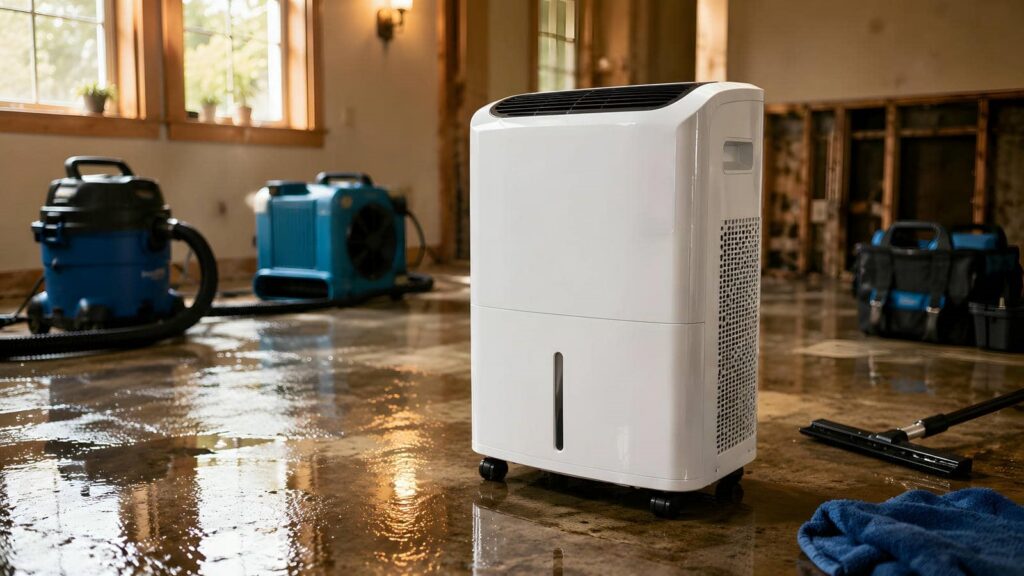
Position air movers to create a steady crossflow across wet floors, walls, and hidden cavities, and keep each unit aimed to push moisture toward open paths.
Set dehumidifiers in the driest accessible area with doors and windows closed, then route the hose to continuous drainage or empty the reservoir as needed.
You’ll need to balance airflow and moisture removal so the space dries evenly without trapping humid air in corners.
Air Mover Placement
Set air movers so they push wet air across the affected surfaces and drive moisture toward the dehumidifier intake, creating steady, controlled airflow throughout the damaged area.
You’ll want each unit aimed along walls, under cabinets, and across carpet edges to lift evaporation without blasting debris. Keep the stream low and direct, and overlap coverage so no damp pocket stays still.
Rotate units only when a surface dries enough to need a new angle. Leave pathways open so air can circulate around furniture and trim.
You’re part of a coordinated drying setup, so place fans to support one another, not compete. Check for dead zones with your hand, then adjust until airflow feels even, purposeful, and continuous across the whole room.
Dehumidifier Setup
With the air movers already directing moisture toward the work area, place the dehumidifier where it can pull from the wettest zone and discharge dry air without obstruction. You’re building a controlled drying system, so keep doors closed and verify that hoses drain continuously.
Set the unit level, then confirm intake and exhaust paths stay clear for the whole job. Check readings often so you can adjust placement as moisture drops.
- Position it near the heaviest wet material.
- Leave space around every side.
- Route the drain safely and steadily.
- Watch humidity fall, then feel the progress.
When you work this way, you’re part of the crew that restores order fast, protects materials, and keeps the home moving back to normal.
Dry Walls, Floors, and Hidden Spaces
Walls, floors, and hidden cavities dry best when you move air, control humidity, and monitor moisture at the source and within the structure.
You should direct airflow across baseboards, wall surfaces, and subfloors, then open access points so trapped vapor can escape. Remove toe kicks, drill small weep holes where needed, and expose wet insulation, trim, or carpet padding that blocks drying.
Keep the equipment running with steady, even circulation, and avoid sealing damp materials back into place too soon. If you’re working with our team’s approach, you’ll see that patience and consistency protect finishes and reduce hidden decay.
Drying these areas takes coordination, but you can get there faster when every layer has a path for air and every pocket can breathe.
Check Moisture Levels as You Dry
Moisture readings tell you whether drying is actually working, so check them at regular intervals in every affected material. You’ll use a calibrated moisture meter to track wood, drywall, and subflooring, then compare each reading with unaffected areas nearby.
Keep a simple log so you can spot trends fast and stay part of the crew that fixes damage right the first time.
- Record the baseline before equipment runs.
- Recheck after each drying cycle.
- Note any stagnant zones immediately.
- Confirm readings drop consistently, not just once.
If one area stays high, adjust airflow or dehumidification and measure again. Precise monitoring lets you make informed calls, avoid guesswork, and move the home toward verified dryness with confidence.
Prevent Mold Growth Early
Mold can start within 24 to 48 hours, so you need to act fast once drying begins. Keep indoor humidity below 60% with dehumidifiers and continuous air movement.
Remove damp porous items you can’t dry fully, and bag them so spores don’t spread. Clean hard surfaces with a detergent solution, then dry them completely.
If you’re working as part of a restoration team, wear gloves, eye protection, and an N95 or better respirator when you disturb wet materials.
Watch hidden zones, like wall cavities, baseboards, and under flooring, because trapped moisture feeds growth. Keep your equipment running until readings stay stable.
Quick, disciplined control helps your home feel safe again and keeps your crew aligned around a clean, dry finish.
Repair Water Damage After Drying
Once the structure is fully dry, you can start repairs by documenting what water damaged and removing materials that won’t recover, such as swollen drywall, warped trim, delaminated flooring, and compromised insulation. You’re rebuilding a safe, familiar home, so work methodically and keep each room organized.
Photograph every affected area before you cut or replace anything.
Remove damaged finishes down to sound, dry material.
Clean framing, subfloors, and cavities, then patch gaps and seal joints.
Reinstall matching materials, repaint, and verify that surfaces stay dry.
Measure moisture as you go and replace fasteners, adhesives, and underlayment that lost strength.
When you restore clean edges and solid surfaces, you help your home feel whole again, and you give your household a steady place to settle back in.
When to Call a Water Damage Pro
If water has spread beyond a small, cleanable area, or you suspect contaminated water, hidden moisture, or structural damage, call a water damage pro right away.
You should also bring in a pro if the leak came from sewage, flooding, or a long-running pipe failure. These teams use moisture meters, thermal imaging, air movers, and dehumidifiers to map damage and dry assemblies safely.
When drywall feels soft, floors cup, insulation stays wet, or odors linger, don’t wait. You’ll protect your home, limit mold growth, and avoid hidden decay behind walls and under subfloors.
A qualified crew documents conditions, sets a drying plan, and monitors progress. That gives you a clear path forward and keeps you in control when the job exceeds safe DIY limits.
Frequently Asked Questions
How Long Does Professional Water Damage Drying Usually Take?
Usually, you’ll see professional drying take 3 to 5 days, but you may need longer for deep saturation, hidden cavities, or severe damage. You should expect daily monitoring, equipment adjustments, and moisture verification.
What Equipment Do Pros Use to Detect Hidden Moisture?
You use moisture meters, thermal imaging cameras, hygrometers, and infrared scanners. These tools reveal damp insulation, wall cavities, and subfloors fast, so you can feel confident your drying plan’s targeted and effective.
Can Furniture Be Saved After a Home Floods?
Yes, you can often save furniture if you act fast. You’ll need to remove water, dry materials thoroughly, disinfect surfaces, and inspect for swelling or mold. Upholstered pieces usually need professional restoration or replacement.
Does Insurance Cover Professional Water Damage Drying?
Usually, yes, if you’ve got sudden, accidental damage. You’ll need policy approval, quick documentation, and a licensed mitigation crew. An ounce of prevention beats a pound of cure, so you should review exclusions and deductibles first.
How Do Professionals Handle Contaminated Floodwater?
You handle contaminated floodwater by isolating the area, wearing PPE, extracting water, removing porous materials, disinfecting hard surfaces, and monitoring for pathogens. You’ll protect your home, reduce exposure, and restore safe conditions efficiently.
Final Thoughts
Once you stop the leak, your home becomes a fogged chamber, and the drying tools act like guided winds and silent suns, driving moisture from walls, floors, and hidden cavities. As you monitor each reading, you’re really reading the storm’s retreat. Keep adjusting until the structure is dry, stable, and safe. If mold threatens or damage runs deep, call a pro. Fast, measured action helps you restore order before decay takes root.
Recent Posts
How Property Damage Restoration Companies Assess Damage
Before a restoration crew starts work, property damage restoration begins with evaluating hidden hazards, not
Cost of Property Damage Restoration Services Explained
When you face property damage, the restoration cost can shift fast depending on the damage
Property Damage Restoration Insurance Claims Guide for Homeowners
After property damage, property damage restoration insurance claims require you to move quickly, document everything,