
Contents
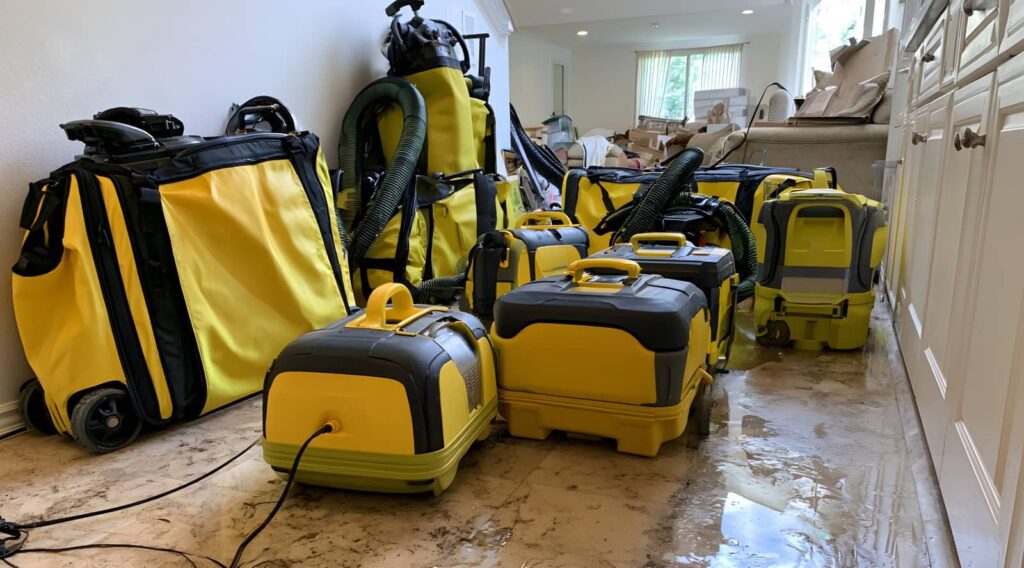
You don’t need guesswork after a flood; you need the right gear. Professional Flood Damage Cleanup starts with submersible pumps, wet/dry vacuums, and truck-mounted extractors to remove water quickly. Then, air movers and dehumidifiers help control drying before structural damage spreads. Pin meters and thermal cameras expose hidden moisture, while disinfecting tools address contamination. The real difference comes from how these tools work together to restore the space properly.
Key Takeaways
- Professionals stop the water source first, then inspect wet areas, baseboards, subfloors, and wall cavities for hidden damage.
- They use submersible pumps, wet/dry vacuums, and truck-mounted extractors to remove standing water efficiently.
- Axial air movers, dehumidifiers, and desiccant units speed drying and help prevent mold and secondary damage.
- Moisture meters and thermal cameras map damp materials and confirm when wood, drywall, and flooring are dry enough.
- Disinfecting tools like sprayers, foggers, HEPA vacuums, and microfiber wipes clean contaminated surfaces safely.
How Pros Start Flood Cleanup
Professionals start flood cleanup by first stopping the water source, then evaluating the damage and moisture spread so they can choose the right extraction and drying equipment.
You should inspect baseboards, subfloors, and wall cavities, then map wet areas with meters and thermal imaging. This gives you a clear plan and helps your team work fast, safely, and together.
The flood damage cleanup equipment used by professionals includes moisture meters, infrared cameras, air movers, and dehumidifiers, but you’ll select each tool based on material type and saturation level.
Remove contaminated contents, document conditions, and set containment if needed.
When you follow this process, you reduce secondary damage, protect the structure, and stay aligned with proven restoration practices your crew can trust.
Flood Cleanup Equipment for Water Removal
For water removal, you’ll need equipment that can pull bulk water quickly and handle different surface types without causing extra damage.
You’ll typically use submersible pumps for deep standing water and wet/dry vacuums for smaller areas, edges, and tight spaces. Truck-mounted or portable extractors give you strong suction on carpet, tile, and concrete, so you can work efficiently across the whole site.
Squeegees, floor mops, and weighted extractors help you chase water toward drains and low points. When you’re part of a crew, you’ll move faster by matching the tool to the material and the water depth. That keeps your process controlled, reduces tracking, and helps your team stay organized.
Always check hose capacity, power needs, and access before you start extracting.
Drying Equipment That Prevents Structural Damage
Once bulk water is out, you need drying equipment that can stabilize materials before swelling, warping, or microbial growth sets in.
You use axial air movers to push high-velocity air across floors, baseplates, and wall cavities, speeding evaporation from wet surfaces. Pair them with low-grain refrigerant dehumidifiers to pull moisture from the air and keep drying momentum steady.
In tight rooms, desiccant units give you stronger moisture control and work well in cooler conditions. Direct airflow so you create a continuous drying path, not dead spots.
Raise furniture, open cavities when needed, and keep equipment running until materials return to serviceable moisture levels. When you set up correctly, you protect framing, drywall, and trim, and you help your crew finish with confidence together.
Moisture Detection Tools for Hidden Damage
To find hidden water before it turns into concealed damage, you rely on moisture detection tools that show what’s happening inside walls, floors, and ceilings.
You use pin meters to test wood and drywall, and noninvasive scanners to read moisture without opening finishes.
Thermal cameras help you spot cool, wet areas fast, so you can map affected zones with confidence.
You compare readings across rooms, note abnormal spikes, and check baseboards, subfloors, and insulation.
This data guides your drying plan and keeps your crew aligned on where to work next.
When you measure carefully, you protect the structure, reduce guesswork, and stay in control together.
Consistent monitoring also confirms when materials return to safe moisture levels.
Disinfecting Equipment for Flood Cleanup
When floodwater leaves behind bacteria, sewage, or mold, you use disinfecting equipment to treat surfaces and limit contamination.
Professional crews rely on backpack sprayers, pump sprayers, electrostatic sprayers, and foggers to apply EPA-registered disinfectants evenly across framing, drywall, concrete, and contents.
You also use microfiber pads, disposable wipes, and HEPA vacuums to remove debris before treatment, because disinfectants work best on clean surfaces.
For porous materials, you may need multiple passes and controlled dwell time to meet label directions.
Wear gloves, eye protection, and respiratory protection, and keep the work zone contained so your team stays safe and coordinated.
When you disinfect methodically, you help restore a space that feels safe, orderly, and ready for the next drying step.
Frequently Asked Questions
How Do Professionals Dispose of Contaminated Floodwater Safely?
You pump contaminated floodwater into sealed tanks, filter solids, and transport it to approved wastewater facilities. You’ll wear PPE, use backflow prevention, and disinfect hoses, so you protect your crew and community together.
What Training Do Technicians Need to Use Flood Cleanup Equipment?
You need water-damage restoration training, OSHA safety, respirator and PPE fit testing, electrical and contamination awareness, moisture-meter use, dehumidifier and extractor operation, and supervised practice so you can work confidently with your team.
How Long Does a Full Flood Restoration Job Usually Take?
Usually, you’ll need 3 to 10 days for a full flood restoration job, though severe structural damage can take longer. You’ll move faster when technicians use commercial extractors, air movers, dehumidifiers, and moisture meters.
Can Insurance Cover Professional Flood Cleanup Equipment Costs?
Yes—often. About 1 in 50 insured homes files a water-damage claim yearly, and you can usually get coverage for rental dehumidifiers, air movers, and extraction gear if your policy and adjuster approve it.
What Safety Gear Do Crews Wear During Flood Damage Cleanup?
You’ll see crews wear waterproof boots, gloves, goggles, respirators, and coveralls; they’ll also use hard hats and knee pads when needed. You’re protected from contaminants, sharp debris, mold, and electrical hazards during cleanup.
Summary
When you face flood damage, the right equipment helps you act fast and limit losses. Pros often remove hundreds of gallons of water in minutes with submersible pumps and truck-mounted extractors, then use air movers and dehumidifiers to dry framing and flooring. Moisture meters and thermal cameras reveal hidden dampness before mold can spread. With the right tools, you can restore a wet space safely, efficiently, and with less structural damage.
Recent Posts
Property Damage Restoration vs Home Repair Differences
When you’re deciding between property damage restoration and home repair, the difference usually comes down
When to Call Property Damage Restoration Services
You should call property damage restoration services as soon as you notice water stains, smoke
Property Damage Restoration Timeline for Homeowners
Some homeowners file a property damage claim at some point, and your timeline can move