
Contents
You notice a musty smell in your hallway after a storm, but the paint still looks normal. That’s often how hidden water damage starts. You might also feel damp or cool spots on walls, spot yellow stains, see peeling paint, or find wallpaper bubbling. In worse cases, drywall softens, bulges, or grows mold near baseboards and corners. Some signs are subtle, and one of them can point to a bigger problem.
Key Takeaways
- Musty odors near walls, baseboards, or corners often signal hidden moisture or mold.
- Damp, cool wall sections can indicate water trapped behind the surface.
- Yellow rings, brown stains, or bubbling paint suggest active or past leaks.
- Peeling wallpaper or blistering paint often means moisture is trapped in the wall.
- Mold, soft drywall, or sagging walls are serious warning signs that need inspection.
Musty Smells That Won’t Go Away
If you notice a musty smell that won’t go away, even after cleaning or airing out the room, it can point to hidden moisture inside the walls.
You should treat this odor as one of the clearest signs of hidden water damage in walls, especially when it lingers near baseboards, outlets, or corners. The smell often comes from mold growth or damp materials trapped behind the surface.
You can check for a stronger scent after rain or when the HVAC runs, since airflow may spread it. Don’t ignore the pattern, because early attention helps you stay ahead of larger repairs.
If the odor keeps returning, you’re not overreacting; you’re noticing a warning that deserves a closer look from a qualified professional.
Unexplained Dampness or Cool Wall Areas
Another clue often shows up right alongside that lingering odor: a wall that feels damp or unusually cool to the touch.
You might notice this when you run your hand over the surface and the temperature feels uneven compared with nearby areas. That difference usually points to moisture moving behind the wall, where insulation, drywall, or framing can hold it.
Check the area more than once, especially after rain, plumbing use, or changes in indoor humidity. If the coolness stays in the same spot, treat it as a warning sign rather than a temporary draft.
You’re not overreacting by paying attention; careful observation helps your household catch hidden damage early and stay confident before the problem spreads farther.
Water Damage Stains on Walls
You can often spot water damage stains by looking for common patterns like yellow rings, brown patches, or spreading edges on the wall.
You may also notice paint that darkens, bubbles, or peels where moisture has seeped in.
When these stains grow, change shape, or return after cleaning, they often signal hidden damage behind the surface.
Common Stain Patterns
Water damage stains on walls often start as faint, irregular discolorations that gradually darken or spread, especially near ceilings, windows, baseboards, and plumbing lines.
You may notice ring-shaped marks where leaks dry in stages, or long vertical trails that follow studs and seams. Bulging patches can outline a stain’s edge, while wavy, uneven borders often show repeated moisture exposure.
In corners, you might see clustered blotches where condensation collects and lingers. Around outlets or trim, stains can appear in narrow bands that mirror hidden framing.
When you inspect these patterns together, you can tell whether water entered once or keeps returning. Staying alert to these shapes helps you join other careful homeowners who catch damage early and protect the wall before it worsens.
Color Changes On Paint
If hidden moisture is working through the wall, the paint often loses its original, even finish and starts to look dull, patchy, or slightly discolored.
You may notice soft yellowing, faint brown cast, or a washed-out area that stands apart from the surrounding surface. This change usually appears unevenly, especially near corners, trim, or seams where dampness can spread.
You can compare the affected spot with nearby paint to judge whether the color shift is local or broad. Fresh paint won’t always blend perfectly if moisture remains behind the surface, so inspect carefully before assuming it’s only aging.
When Stains Signal Damage
Stains are one of the clearest signs that hidden moisture has reached a wall’s surface. You may see yellow, brown, or rust-colored patches that grow slowly after leaks, condensation, or plumbing failures.
Check whether the stain has a defined edge, a dark center, or a ringed pattern, because these details often show active seepage. If the mark feels damp, soft, or cooler than nearby paint, you’re likely dealing with ongoing damage.
You should also watch for stains that return after cleaning, since that usually means the source hasn’t been fixed. In a shared home or apartment, report the spot early so everyone can protect the space.
Quick attention helps you limit mold, preserve drywall, and stop a small warning sign from becoming a larger repair.
Peeling Paint or Bubbling Wallpaper
If you notice paint bubbling or wallpaper peeling, you’re often seeing moisture trapped behind the wall surface.
Water can weaken the adhesive or push against the finish, causing these changes to spread over time.
You should check the area promptly, since these signs often point to an active leak or ongoing dampness.
Paint Bubbling Causes
When moisture gets behind a wall, it can push paint away from the surface and cause bubbling, peeling, or warped wallpaper. You can often trace the cause to a leak, condensation, or poor sealing around openings.
To assess the area, look for these clues:
- soft or raised paint
- uneven wall texture
- damp spots near fixtures
- musty indoor air
- recurring discoloration
You’ll usually notice the damage where water enters first, such as around windows, pipes, or roofs.
If you belong to a home that feels settled but not quite right, trust these early changes. They often mean moisture is collecting inside the wall, weakening the finish and signaling a problem you shouldn’t ignore.
Wallpaper Peeling Signs
Peeling paint and bubbling wallpaper often mean moisture has built up behind the wall and started loosening the finish. You may notice edges curling, seams lifting, or small blisters that grow after rain, plumbing use, or humidity spikes.
Check whether the damage clusters near windows, bathrooms, sinks, or exterior walls, since those areas often share the same hidden leak pattern. Press gently around the spot; soft drywall, a musty smell, or dark staining adds weight to the warning.
If you belong to a household that values early action, mark the area, photograph it, and inspect nearby pipes, roofs, and caulk lines.
Don’t just repaint. First, find the source, dry the wall, and repair the leak so the problem doesn’t return.
Soft, Warped, or Bulging Walls
Soft, warped, or bulging walls often point to moisture trapped behind the surface, where it weakens drywall, plaster, or wood over time. You can spot this by checking for:
- slight inward or outward curves
- areas that feel spongy when pressed
- seams that separate from trim
- paint that no longer lies flat
- panels that shift when tapped
You don’t need to panic, but you should inspect the area methodically and note where the distortion starts.
Compare nearby walls, because hidden damage often spreads unevenly. If the surface keeps changing, you’re likely dealing with active water intrusion, not normal settling.
Acting early helps you protect your space, stay informed, and avoid larger repairs later.
Mold Growth Near Baseboards or Corners
Mold growth near baseboards or in wall corners often signals moisture that’s lingering behind the surface. You may notice dark spots, fuzzy patches, or a faint musty odor where walls meet trim.
Check for discoloration that returns after cleaning, since that usually means the moisture source remains active. Focus on areas near bathrooms, kitchens, laundry rooms, or exterior walls, because those spots often collect hidden dampness.
You can test nearby paint and caulk for peeling, cracking, or staining, which often appears alongside mold. If you share your home with family, these clues help everyone stay alert together.
Treat any repeated growth as a warning that the wall may be holding water and needs closer inspection before the damage spreads.
When Water Damage Needs Professional Help
When water damage affects more than a small, isolated area, you should bring in a professional to assess the wall and find the source.
You’ll need expert help if you notice:
- spreading stains
- soft or bulging drywall
- recurring musty odors
- visible mold return
- electrical issues nearby
A qualified inspector can test moisture, trace leaks, and check hidden cavities without unnecessary damage.
You stay safer because they can judge whether the problem comes from plumbing, roofing, or seepage.
If the wall feels warm, sags, or crumbles, don’t wait. Call sooner when the area keeps worsening after drying attempts.
Acting as a team with a professional helps protect your home, your health, and your peace of mind.
Frequently Asked Questions
How Long Can Hidden Wall Water Damage Go Unnoticed?
It can go unnoticed for weeks, months, or even years if you don’t inspect regularly. You’ll catch it sooner by checking for stains, odors, peeling paint, and soft spots before damage spreads.
Can Hidden Water Damage Affect Indoor Air Quality?
Yes, it can, like a silent leak in your home’s lungs. You may breathe mold spores and damp odors, which can trigger allergies, irritation, and asthma, so you should inspect walls promptly.
What Tools Detect Moisture Inside Walls?
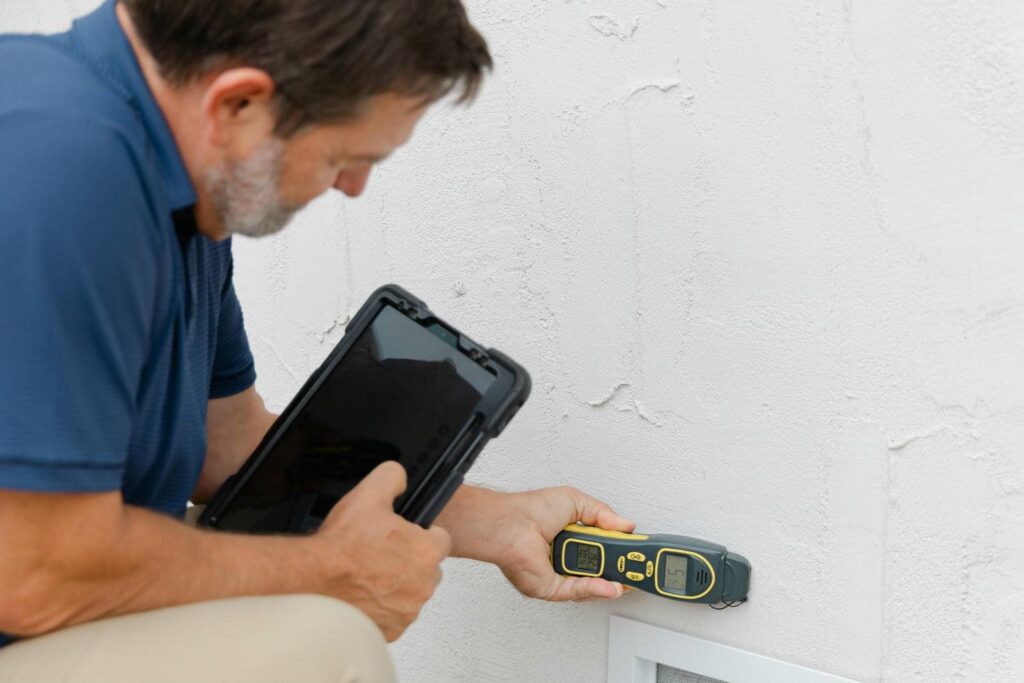
You can use a moisture meter, thermal imaging camera, and borescope to detect moisture inside walls. You’ll check surface readings, spot temperature anomalies, and inspect cavities, helping you confirm hidden leaks early.
Are Ceiling Leaks Related to Wall Water Damage?
Yes—like water finding cracks, you’ll often see ceiling leaks spread into walls. You should inspect adjacent drywall, insulation, and framing, because moisture travels downward and sideways, quietly weakening structure and inviting shared damage.
Does Homeowners Insurance Cover Hidden Water Damage?
Usually, yes, if a covered peril caused it and you report it quickly. You’ll need proof, and your policy may exclude long-term leaks, neglect, or gradual damage, so review your coverage carefully.
Summary
If you notice musty smells, damp patches, stains, peeling surfaces, soft drywall, or mold, you should treat the walls as a clue and not a coincidence. The theory is simple: hidden water leaves patterns before it causes major damage. By checking each sign methodically, you can confirm whether moisture is trapped inside. If the evidence keeps adding up, you’ll know it’s time to call a professional before the problem spreads.
Recent Posts
How Property Damage Restoration Companies Assess Damage
Before a restoration crew starts work, property damage restoration begins with evaluating hidden hazards, not
Cost of Property Damage Restoration Services Explained
When you face property damage, the restoration cost can shift fast depending on the damage
Property Damage Restoration Insurance Claims Guide for Homeowners
After property damage, property damage restoration insurance claims require you to move quickly, document everything,