
Contents
Ceiling water damage can lead to serious structural issues if not addressed promptly. You need to assess the damage carefully, ensuring you’ve identified the source and severity before proceeding with repairs. Understanding the proper techniques for effective remediation is vital for long-lasting results. Let’s explore the essential steps you should take to restore your ceiling and prevent future complications.
Key Takeaways
- Conduct a thorough assessment of water damage to determine the source and severity before initiating repairs.
- Ensure safety by wearing PPE, turning off power, and checking for electrical hazards in the workspace.
- Remove damaged ceiling materials carefully using appropriate tools to minimize dust and debris.
- Dry the affected area thoroughly with dehumidifiers and proper airflow before installing new ceiling panels.
- Choose durable, mold-resistant paint and sealants to prevent future water damage and enhance the ceiling’s longevity.
Assessing the Extent of Water Damage
When you encounter ceiling water damage, it’s essential to assess the extent of the issue before proceeding with repairs. Start with a thorough water stain assessment; this helps identify the source and severity of the damage. Look for discoloration, peeling paint, or sagging areas, as these often indicate deeper problems.
Next, utilize a moisture meter to measure the moisture levels in the affected area. This tool provides an accurate reading, helping you determine whether the damage is isolated or widespread. Press the meter against the ceiling surface and note the readings—high levels indicate the need for immediate action.
Ensuring Safety Before Repair
Before you begin any repair work on a water-damaged ceiling, ensuring safety is essential to protect yourself and others in the vicinity. Start by equipping yourself with proper personal protective equipment (PPE), such as gloves, safety goggles, and a mask, to guard against mold spores and debris. Inspect the area for any electrical hazards; water and electricity are a dangerous combination. Turn off the power to the affected area at the circuit breaker to ensure electrical safety before proceeding.
Make sure the workspace is well-ventilated to mitigate inhalation risks. If the ceiling is sagging or appears unstable, use caution before accessing it; consider using a ladder with a partner for additional support. Following these safety protocols helps prevent accidents and fosters a sense of community responsibility as you engage in repairs that benefit everyone involved. Stay safe, and take these precautions seriously.
Identifying and Stopping the Source of Water
To effectively repair a water-damaged ceiling, you must first identify and stop the source of the water intrusion. Begin with thorough water leak detection; look for signs such as discoloration, peeling paint, or damp spots on the ceiling. These indicators often point to the origin of the leak. Next, conduct a plumbing inspection to assess your pipes, fixtures, and connections. Pay attention to any visible cracks or corrosion that could be causing the issue.
If the leak isn’t apparent, consider using moisture meters or infrared cameras for a more detailed analysis. Once you’ve located the source, it’s vital to address it immediately—whether that means tightening fittings, replacing a broken pipe, or sealing a roof leak. Remember, preventing further damage is important, so don’t hesitate to call a professional if necessary. Taking these steps ensures you’re on the right path to restoring your ceiling effectively.
Removing Damaged Ceiling Materials
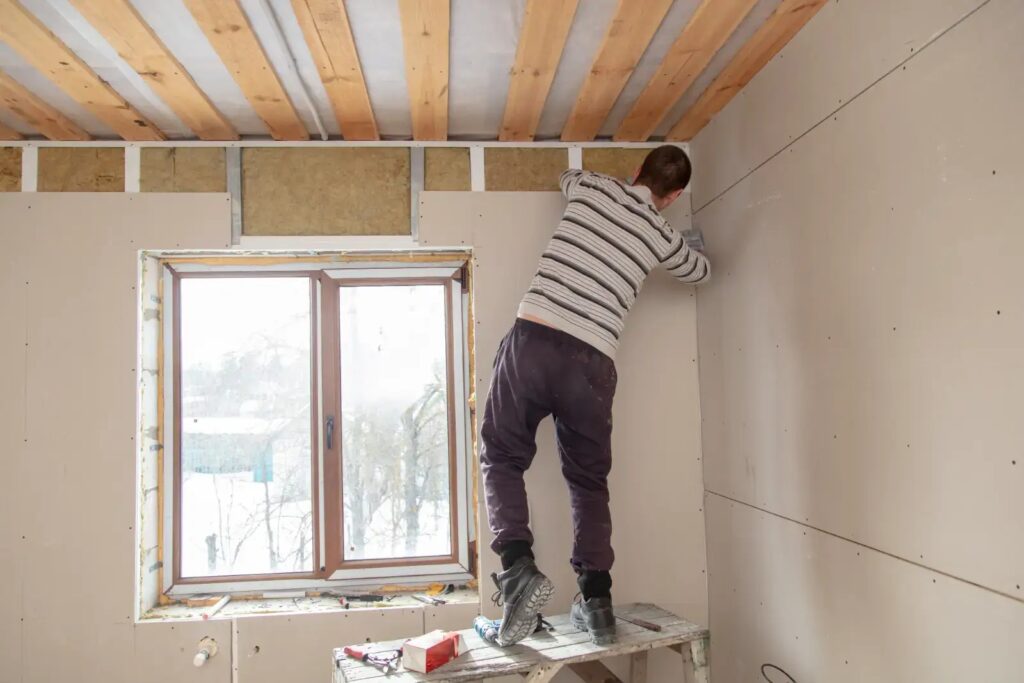
Once you’ve stopped the source of the water intrusion, the next step involves removing the damaged ceiling materials. Start by gathering the necessary removal tools, such as a utility knife, pry bar, and safety goggles. Carefully cut away any wet drywall or plaster, making sure you work in manageable sections to prevent further damage. If the ceiling tiles are compromised, remove them gently to minimize dust and debris.
As you extract the materials, consider proper disposal methods. Place the damaged materials in heavy-duty trash bags to avoid leaks, and check local regulations for disposal guidelines, especially if mold is present. It’s essential to wear protective gear, including a mask, to avoid inhaling harmful particles. This step clears the way for repairs and helps maintain a safe environment in your home. By following these techniques, you’ll ensure a solid foundation for the restoration process.
Drying the Affected Area
Effective drying of the affected area is essential to prevent further damage and the growth of mold. You’ll want to utilize a combination of dehumidifier use and improved air circulation for ideal results. Start by placing dehumidifiers in the space to extract moisture from the air. Make sure that windows and doors are open to promote airflow, which aids in drying.
Here’s a quick reference table for your drying process:
| Step | Action | Purpose |
|---|---|---|
| 1. Assess Damage | Inspect the affected area | Identify moisture levels |
| 2. Dehumidifier Use | Set up units | Remove humidity |
| 3. Air Circulation | Open windows/doors | Enhance drying speed |
| 4. Monitor Progress | Check moisture levels | Make certain thorough drying |
Following these steps will help you effectively dry the area, reducing the risk of costly repairs later on.
Treating for Mold and Mildew
Once you’ve dried the affected area, it’s essential to identify any mold growth that may have developed. Look for discoloration or a musty odor, as these are strong indicators of mold and mildew presence. Effective removal methods include using a mixture of water and detergent or specialized mold removers to ensure complete eradication.
Identifying Mold Growth
Although you may not notice it immediately, identifying mold growth in your ceiling can be essential for maintaining a safe living environment. To begin, utilize mold identification techniques such as visual inspections, noting any discoloration or water stains. Pay attention to musty odors; they often indicate hidden mold. If you suspect mold, consider using moisture meters to measure humidity levels, as excessive moisture can foster growth. Implementing mold prevention strategies, like proper ventilation and regular inspections, keeps your home safe. If you find mold, act quickly to prevent it from spreading. Remember, early detection protects your health and preserves your home’s integrity, fostering a sense of belonging in your living space.
Effective Removal Methods
When you discover mold and mildew in your ceiling, addressing the issue promptly is essential to prevent further damage and health risks. Start with effective water extraction to remove any moisture contributing to the growth. Use a wet/dry vacuum to ensure you eliminate as much water as possible. Next, implement effective drying methods, such as dehumidifiers and fans, to promote airflow and speed up the drying process. Once the area is dry, clean the affected surfaces with a mixture of water and detergent, applying it with a sponge or cloth. For stubborn mold, consider a commercial mold remover. Finally, seal the area with a mold-resistant paint to protect against future infestations and ensure your living space remains safe and healthy.
Repairing Structural Damage
Before you start repairs, you’ll need to assess the severity of the structural damage to determine the necessary actions. Look for signs of sagging, cracking, or compromised beams, as these indicate areas that require reinforcement. Once you’ve identified the affected areas, you can implement appropriate support measures to restore the integrity of your ceiling.
Assessing Damage Severity
To effectively repair structural damage from ceiling water leaks, you must first assess the severity of the damage. Begin by identifying water damage indicators, such as discoloration, sagging, or mold growth. Utilize moisture assessment tools like moisture meters and infrared cameras to accurately gauge the extent of the damage.
| Damage Indicator | Assessment Tool |
|---|---|
| Discoloration | Visual Inspection |
| Sagging | Moisture Meter |
| Mold Growth | Infrared Camera |
| Structural Cracks | Visual Inspection |
| Odor | Moisture Meter |
Reinforcing Affected Areas
While addressing ceiling water damage, reinforcing affected areas is essential to ensure long-term structural integrity. Start by evaluating the extent of the damage; if the joists or beams show signs of compromise, consider using reinforcement techniques such as adding additional framing or utilizing steel brackets. This provides immediate support and enhances the overall strength of your ceiling. If you’re dealing with drywall, make certain you replace any water-damaged sections and apply a backing board for extra stability. Always secure attachments properly to avoid future issues. Remember, maintaining structural integrity isn’t just about fixing the damage; it’s about ensuring your home remains safe and sound for years to come. Prioritize these steps to achieve lasting results.
Replacing Ceiling Panels
When you’ve identified water damage in your ceiling panels, replacing them promptly is crucial to prevent further structural issues and mold growth. Start by choosing the right ceiling panel types for your space—options include drywall, acoustic tiles, or drop ceilings. Each type has unique characteristics, so consider aesthetics and functionality when selecting.
Next, follow proper installation techniques to ensure a secure fit. Here’s a quick checklist to guide you through the process:
- Assess the extent of the damage before starting.
- Remove the damaged panels carefully to avoid further harm.
- Measure and cut new panels accurately for a seamless look.
- Secure the panels using appropriate fasteners.
- Inspect for any remaining moisture before finishing up.
Painting and Finishing Touches
When it comes to painting your repaired ceiling, selecting the right paint is essential for achieving a lasting finish. You’ll want to employ techniques that ensure a smooth application, minimizing imperfections. Finally, adding those finishing touches can enhance durability and protect against future moisture issues.
Choosing the Right Paint
Selecting the right paint for your ceiling after addressing water damage is essential for ensuring both aesthetics and longevity. Your choice enhances the overall look of your space and secures protection against future moisture issues. When considering paint color selection and paint type options, keep the following in mind:
- Durability: Choose a paint that withstands humidity and prevents mold growth.
- Finish: Opt for a finish that reflects light, making the room feel larger and brighter.
- Color: Select a calming shade that complements your decor and creates a cohesive atmosphere.
- Application: Verify the paint is easy to apply for a smooth, professional look.
- Eco-Friendliness: Look for low-VOC options that promote indoor air quality and safety.
Techniques for Smooth Application
Achieving a smooth application for your ceiling paint requires careful preparation and technique. Start by ensuring the surface is clean and free of debris. Use a high-quality roller for an even finish, applying paint in a consistent direction to create a smooth texture. Here’s a quick reference table for effective application techniques:
| Technique | Description | Tips |
|---|---|---|
| Surface Prep | Clean and patch any imperfections | Use primer for better adhesion |
| Roller Technique | Use a quality roller | Roll in small sections |
| Brush Work | Use for edges and corners | Light strokes for blending |
| Paint Consistency | Mix to avoid lumps | Stir thoroughly before use |
| Drying Time | Allow adequate drying time | Follow manufacturer’s guidelines |
Final Touches for Durability
To ensure long-lasting durability in your ceiling paint job, pay attention to the final touches that can greatly enhance the finish. Applying these durability enhancements assures your hard work pays off with long-term solutions.
- Choose high-quality, moisture-resistant paint.
- Use a primer to improve adhesion and longevity.
- Seal edges and seams to prevent future leaks.
- Consider adding a protective topcoat for extra resilience.
- Regularly inspect and maintain to catch issues early.
These steps refine the appearance and solidify the integrity of your ceiling. Embracing these techniques fosters a sense of belonging to a community that values quality and craftsmanship in home maintenance. Your ceiling isn’t just a surface; it’s a reflection of your dedication.
Preventing Future Water Damage
Although water damage can often feel inevitable, implementing proactive measures can greatly reduce your risk of future incidents. Start by employing effective waterproofing techniques, such as applying sealants to vulnerable areas like windows and roofs. These barriers can prevent moisture infiltration and protect your ceiling from leaks.
Regular maintenance is equally essential; inspect your roof and gutters at least twice a year. Clean out debris to ensure proper drainage and prevent water buildup that could lead to leaks. Consider installing a sump pump in basements or crawl spaces to manage potential flooding.
Additionally, monitor your plumbing for leaks and repair any issues promptly. Verify appliances like washing machines and dishwashers are correctly installed and regularly checked. By adopting these strategies, you can foster a secure environment, considerably minimizing the likelihood of ceiling water damage in your home.
Frequently Asked Questions
How Long Does the Entire Water Damage Repair Process Usually Take?
The repair duration typically spans from a few days to several weeks, depending on the severity of damage and restoration timeline. You’ll want to assess the situation thoroughly to ensure proper recovery and prevention.
Can I Repair Ceiling Water Damage Myself, or Should I Hire a Professional?
When steering through the waters of ceiling repair, you can choose the DIY route, crafting your skills like a shipbuilder, or anchor down with professional services for ensured results. Each path has its own merits.
What Tools and Materials Do I Need for Ceiling Water Damage Repair?
You’ll need safety precautions like goggles and gloves, along with repair techniques involving drywall, joint compound, a putty knife, and a paint roller. Gather these tools and materials to effectively tackle your ceiling water damage repair.
How Do I Know if My Ceiling Is Structurally Compromised?
To determine if your ceiling is structurally compromised, conduct a thorough ceiling inspection. Look for sagging, cracks, or stains. These signs often indicate a loss of structural integrity, requiring immediate attention to ensure safety and stability.
What Insurance Coverage Is Available for Ceiling Water Damage Repairs?
When it rains, it pours, so check your insurance policies. Most cover ceiling water damage, but be aware of coverage limits. Reviewing your policy ensures you understand what’s included and how to file claims effectively.
Wrap-Up
Addressing ceiling water damage is like patching a leak in a boat; if left unchecked, it can lead to greater issues. By thoroughly evaluating the damage, ensuring safety, and replacing compromised materials, you can restore your ceiling to its original condition. Don’t forget to prioritize moisture-resistant solutions and regular inspections to prevent future incidents. With these techniques, you’ll repair the damage and safeguard your home against future water-related problems.
Recent Posts
10 Tips for Sewage Cleanup and Mold Removal
When faced with sewage cleanup and mold removal, it’s essential to act promptly and carefully.
Why Choose Professional Sewage and Mold Services?
Just as a ship needs a skilled captain to navigate stormy seas, your home requires
10 Best Sanitation Methods for Water Damage Repair
When water damage strikes, do you really know where to begin? Addressing the aftermath requires