
Contents
When water damage occurs, you can’t afford to overlook structural drying. It plays a crucial role in preventing mold growth and structural degradation. By efficiently removing excess moisture, you not only safeguard your property but also improve indoor air quality. Understanding the equipment and techniques involved is necessary for effective cleanup. However, the real question remains: what specific methods can you employ to guarantee peak drying and prevent future water damage?
Key Takeaways
- Structural drying prevents mold growth by controlling moisture levels, reducing health hazards for occupants.
- Timely drying minimizes structural damage and avoids costly repairs associated with prolonged moisture exposure.
- Effective drying improves indoor air quality, creating a healthier environment for residents.
- Proper airflow and temperature control during drying accelerate evaporation and enhance overall efficiency.
- Utilizing specialized equipment like dehumidifiers and air movers ensures a targeted and effective cleanup process.
Understanding Structural Drying
When water damage occurs, understanding structural drying becomes essential for effective cleanup and restoration. You need to grasp the drying principles that guide the process, ensuring a thorough and efficient outcome. Start by conducting moisture measurement using specialized tools to identify affected areas and gauge moisture levels in materials. This data helps you formulate a targeted drying strategy.
Implementing proper airflow and temperature control accelerates evaporation, critical for reducing moisture content. You’ll want to position dehumidifiers effectively to maintain an ideal environment, promoting rapid drying while preventing secondary damage.
The Importance of Timely Drying
Timely drying plays a significant role in mitigating the effects of water damage. When you act promptly, you enhance moisture control and reduce the potential for mold growth, structural instability, and long-term damage. A timely intervention helps preserve both your property and your peace of mind.
- Prevents mold and mildew growth within 24-48 hours
- Reduces the risk of structural damage and costly repairs
- Minimizes health hazards associated with prolonged moisture exposure
- Improves air quality for occupants and restores comfort
Equipment Used in Structural Drying
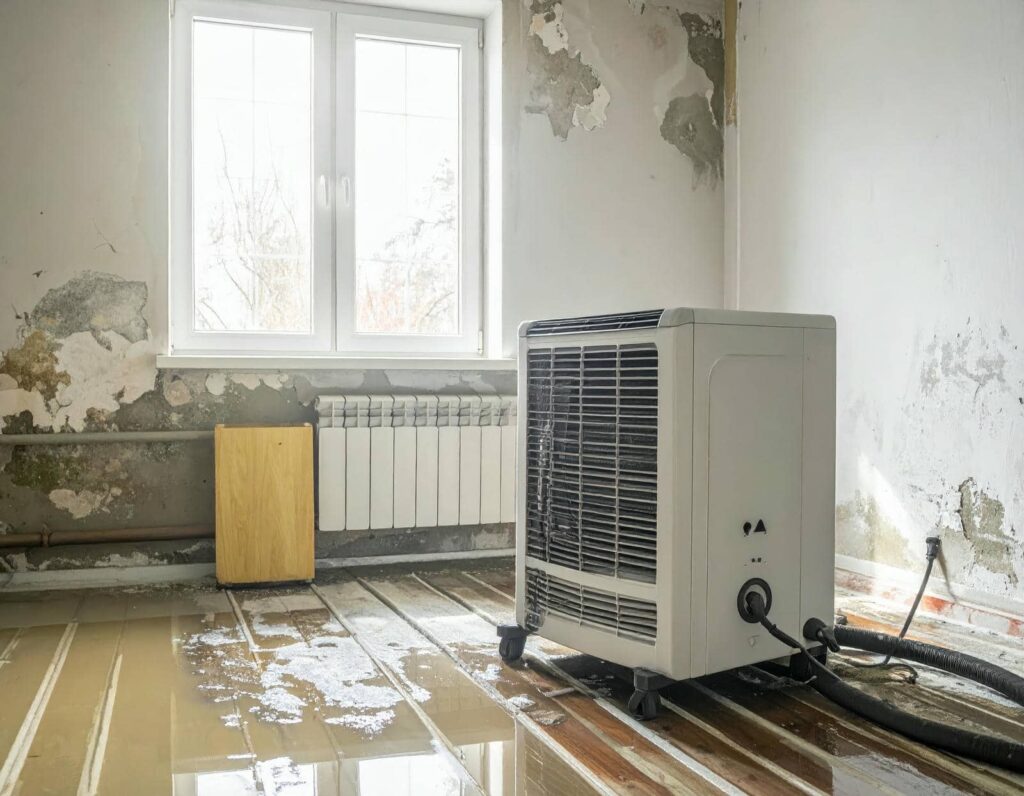
Effective structural drying relies on a variety of specialized equipment designed to expedite the moisture removal process. Among the most critical tools are dehumidification systems, which work to lower humidity levels in affected areas. These systems extract moisture from the air, helping to prevent mold growth and further damage. You’ll find that choosing the right capacity is essential, as it directly impacts the drying efficiency.
Complementing dehumidifiers are air movers, which circulate air throughout the space. These high-velocity fans help to increase evaporation rates by directing airflow across surfaces, ensuring moisture is effectively removed. Positioning air movers strategically enhances their effectiveness, creating a systematic approach to drying.
Together, dehumidification systems and air movers form a cohesive drying strategy. By understanding and utilizing this specialized equipment, you can facilitate a more efficient and thorough structural drying process, leading to successful cleanup and restoration.
Techniques for Effective Drying
Utilizing the right equipment is only the beginning; applying effective techniques for drying is equally important. To achieve ideal results, focus on airflow management and moisture control throughout the drying process. Here are key techniques you should implement:
- Establish a Controlled Environment: Maintain consistent temperature and humidity levels to enhance evaporation.
- Use Air Movers Strategically: Position fans to create a cross-flow of air, guaranteeing moisture is effectively displaced.
- Employ Dehumidifiers: Utilize these devices to extract moisture from the air, preventing secondary damage.
- Monitor Progress: Regularly check moisture levels with a meter to confirm your techniques are successful.
Preventing Future Water Damage
While water damage can occur unexpectedly, implementing preventive measures can considerably reduce your risk. Start by evaluating areas prone to moisture accumulation, such as basements or bathrooms. Install sump pumps and guarantee proper drainage systems to divert water away from your property. Regularly inspect your roof, gutters, and downspouts for blockages and leaks that could lead to water intrusion.
Moisture control is essential. Use dehumidifiers in humid environments to maintain ideal indoor humidity levels, ideally between 30-50%. Seal any cracks in your foundation or walls to prevent water seepage. Additionally, consider installing waterproof barriers in vulnerable areas.
Educating your household about the importance of timely repairs and reporting any signs of leaks can foster a supportive environment. By taking these proactive steps, you not only protect your home from future water damage but also create a sense of community responsibility in safeguarding shared spaces.
Frequently Asked Questions
How Long Does Structural Drying Typically Take to Complete?
Structural drying typically takes anywhere from 3 to 7 days, depending on drying duration and various drying factors like humidity, temperature, and material type. Monitoring these conditions guarantees effective and timely drying for your space.
Can Structural Drying Prevent Mold Growth?
Yes, structural drying can prevent mold growth by reducing moisture levels, which inhibit mold spores from thriving. You’ll effectively minimize the risk of infestation if you address water issues promptly and maintain controlled drying conditions.
What Are the Signs of Inadequate Drying?
When moisture lingers like an unwelcome guest, you’ll notice signs of inadequate drying. Look for persistent dampness, mold odors, or visible moisture detection. Proper drying techniques are essential to avoid long-term damage and health concerns.
Is Professional Help Necessary for Structural Drying?
You might find professional help essential for structural drying. Experts provide thorough assessments and employ advanced drying techniques, ensuring effective moisture removal. Their expertise minimizes risks, promoting safety and long-term stability in your property.
How Can I Assess the Effectiveness of Drying?
To assess the effectiveness of drying, you’ll need to measure moisture levels using specialized moisture measurement tools. Regularly check with drying equipment to guarantee consistent conditions, confirming your space is truly dry and safe.
Summary
To sum up, structural drying is as crucial to water damage cleanup as a foundation is to a building. By addressing moisture promptly, you considerably lower the chances of mold growth and structural deterioration, safeguarding your property and health. Utilizing advanced equipment and techniques guarantees thorough drying, creating a safe and comfortable environment. Don’t underestimate the importance of timely action; it’s your best defense against costly repairs and potential health hazards in the future.
Recent Posts
Cost of Property Damage Restoration Services Explained
When you face property damage, the restoration cost can shift fast depending on the damage
Property Damage Restoration Insurance Claims Guide for Homeowners
After property damage, property damage restoration insurance claims require you to move quickly, document everything,
Property Damage Restoration Process for Homes Explained
You probably don’t know that restoration crews often start by finding hidden damage before they