
Contents
Like a skilled detective, you must carefully examine the scene of damage to uncover all hidden damage cleanup issues. It’s essential to assess every surface and document your findings for insurance claims. Once you’ve done that, the next steps can greatly impact the effectiveness of your cleanup process. Let’s explore how you can optimize your approach to guarantee an efficient and thorough restoration.
Key Takeaways
- Thoroughly assess the damage by examining all affected areas and documenting findings with notes and photographs for insurance claims.
- Utilize high-capacity drying equipment, such as dehumidifiers and air movers, to expedite the drying process and enhance evaporation.
- Implement mold prevention strategies by controlling humidity levels and addressing leaks promptly to avoid stagnant water.
- Use mold-resistant materials during repairs to inhibit future mold growth and promote long-term resilience.
- Maintain ongoing monitoring with regular inspections and humidity checks to detect and address potential water damage early.
Assess the Damage Thoroughly
When evaluating the damage, you should start by carefully examining the affected area to identify all impacted surfaces and materials. This damage evaluation is essential for understanding the extent of the destruction and planning the next steps. Look for hidden signs, like water stains or warped structures, that could indicate deeper issues.
Once you’ve documented everything, consider how this assessment will affect your insurance claims. Take detailed notes and photographs, as these will aid in discussions with your insurer. Highlighting specific damages will not only support your claim but also demonstrate diligence in addressing the situation.
Utilize Proper Drying Equipment
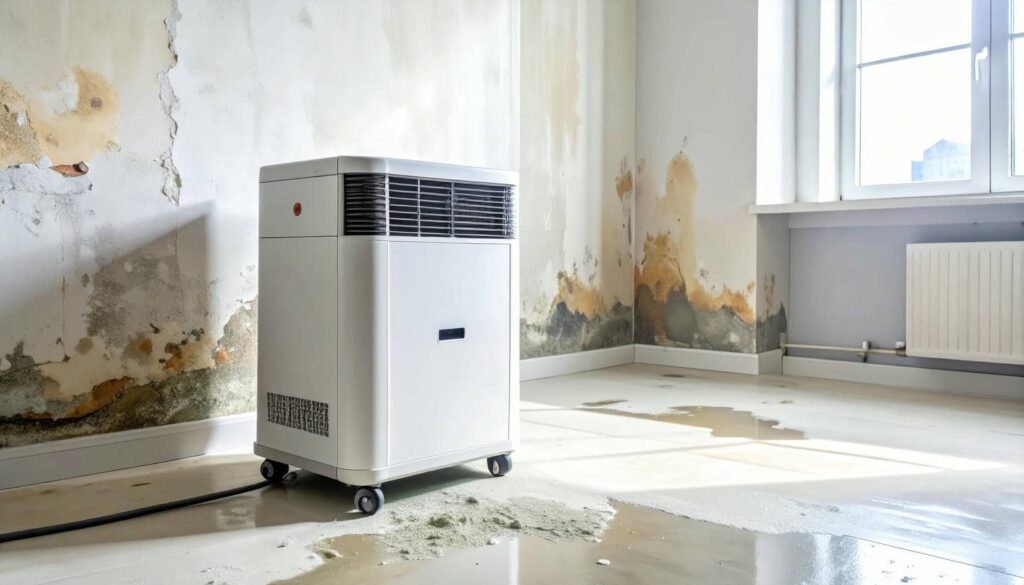
To effectively manage moisture in the aftermath of damage, utilizing proper drying equipment is essential. Start with careful dehumidifier selection; choose a unit that matches the size of the affected area and the extent of moisture present. A high-capacity model can greatly speed up the drying process, preventing further issues.
Next, consider air mover placement. Position air movers strategically to create airflow across damp surfaces, directing the airflow toward wet areas. This enhances evaporation rates and helps maintain consistent temperatures, vital for effective drying.
Implement Mold Prevention Strategies
Even with proper drying equipment in place, mold can still pose a considerable threat if preventive measures aren’t taken. To effectively combat mold growth, you need to implement proactive prevention techniques. Start by controlling humidity levels in your space; aim for a relative humidity of 30-50%. Use dehumidifiers and guarantee proper ventilation in areas like bathrooms and kitchens.
Additionally, inspect your property regularly for leaks or water damage. Promptly address any issues you find, as stagnant water can create an ideal environment for mold. Seal any cracks or openings in walls and foundations to prevent moisture intrusion.
Consider using mold-resistant paints and materials during repairs or renovations. These products can greatly reduce the chance of mold establishing itself. By taking these steps, you’ll foster a healthier living environment and build a community that values resilience against mold threats.
Frequently Asked Questions
What Should I Do Immediately After Discovering Water Damage?
Immediately after discovering water damage, you should initiate an emergency response. Assess the area, shut off water sources, and start water mitigation efforts to minimize further damage, ensuring a proactive approach to protect your space.
How Can I Tell if My Home Has Hidden Mold?
Imagine a hidden garden, thriving in darkness. You’ll spot mold symptoms like musty odors or allergy-like reactions, and moisture detection devices can reveal hidden dampness. Act swiftly to protect your home and loved ones from unseen threats.
Is It Safe to Clean up Damage Myself?
Cleaning up damage yourself can be risky. Without proper safety precautions, you might expose yourself to harmful substances. Weigh the DIY risks against hiring professionals to guarantee both your safety and effective damage resolution.
How Long Does the Damage Cleanup Process Typically Take?
The cleanup timeline can feel like an eternity, but it typically varies. Factors affecting it include the damage extent, materials involved, and your resources. Being proactive will help you navigate this process more efficiently.
What Are the Costs Associated With Professional Damage Cleanup Services?
The costs for professional damage cleanup services vary widely. You should consider insurance coverage options and request cleanup estimates from multiple providers to guarantee you make an informed decision that aligns with your budget and needs.
Wrap-Up
In the intricate dance of damage cleanup, every step counts. By thoroughly evaluating the damage, using the right drying equipment, and implementing mold prevention strategies, you can safeguard your space from future issues. Think of your effort as building a fortress against moisture strong and resilient. Don’t underestimate the importance of these steps; they’re your best line of defense. Take action now to guarantee a healthier, safer environment for years to come.
Recent Posts
Top 5 Sewage Cleanup Techniques for Flood Damage
When a heavy storm causes a sewer backup in your basement, the aftermath can be
Why Use Proper Sewage Cleanup Techniques After Flooding?
Floodwaters can carry a range of harmful pathogens, turning what seems like a simple inconvenience
Top Sewage Cleanup Methods for Flood Damage
When it comes to flood damage, the aftermath can feel overwhelming. Have you considered the